
Every day, the cafeteria buzzes with the sound of chatting students, the beeping of the keypad and occasional laughter over a story that happened the period before. Lunch is bought and eaten—like clockwork—quickly running out by the end of the day. Between the chaos of chicken tenders and sandwiches, someone grabs the last chocolate chip cookie, leaving the bin empty, but not meaningless. As they remove the cookie from its plastic bag, they don’t think about how many people have been in their exact position before; they just eat.
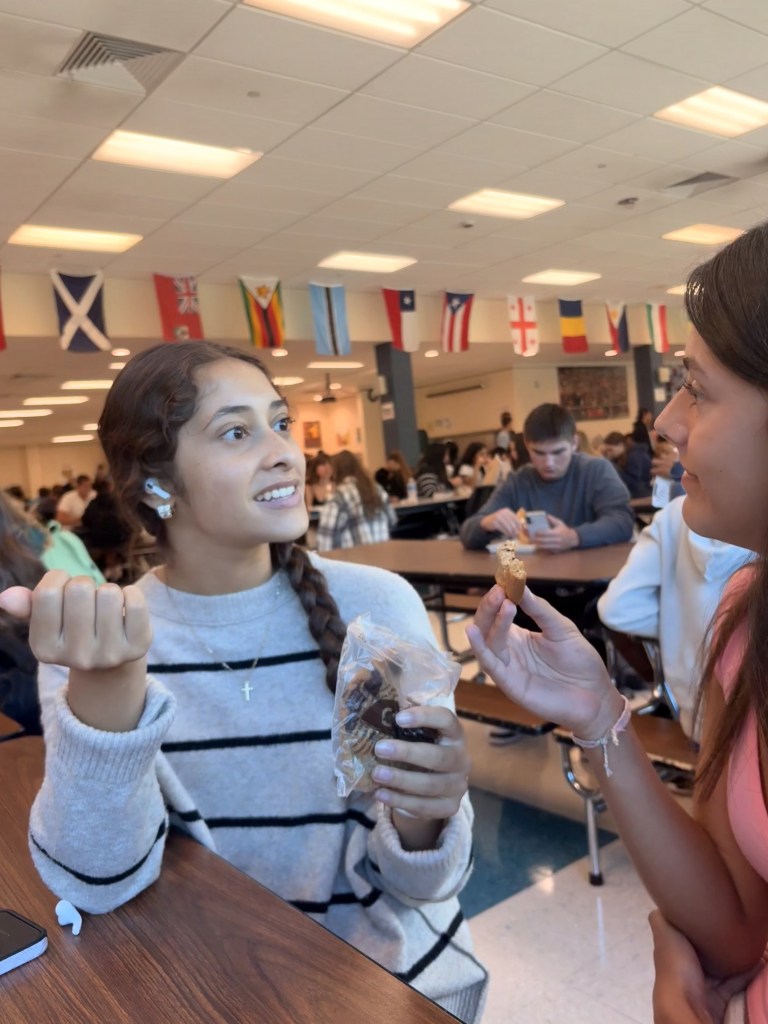
However, for many students the cookies are more than just a treat to pick up at the lunch line. Mila Potash, a sophomore, recalled a time when a friend asked to share her cookie,
“I remember one time my friend asked me for a piece of my cookie, and I said yes. She ended up eating most of it because it was so good. And we were laughing about it.” Students have small, shared interactions over the school cookies every day—they’ve become part of conversations and last-minute study sessions.
“I noticed they were very popular when people started rushing to the cafeteria during lunch to get cookies, and they would run out very fast,” said Potash.
Despite their popularity, the cookies haven’t been around for decades at Masuk—their fame is relatively new.
“I think it’s more of a recent phenomenon, I would say within the last five or six years,” said Ian Lowell, assistant vice principal at Masuk.
In addition, Masuk used to have a different company that made the food. Before the switch to Whitsons Culinary Group, the cafeteria was led by a company called Sodexo. According to Lowell, the Whitsons cookies have been more popular. But the cookies’ popularity has grown beyond the lunch line.
Last year, the cookies made an appearance during midterms, when administrators handed them out to students between exams.
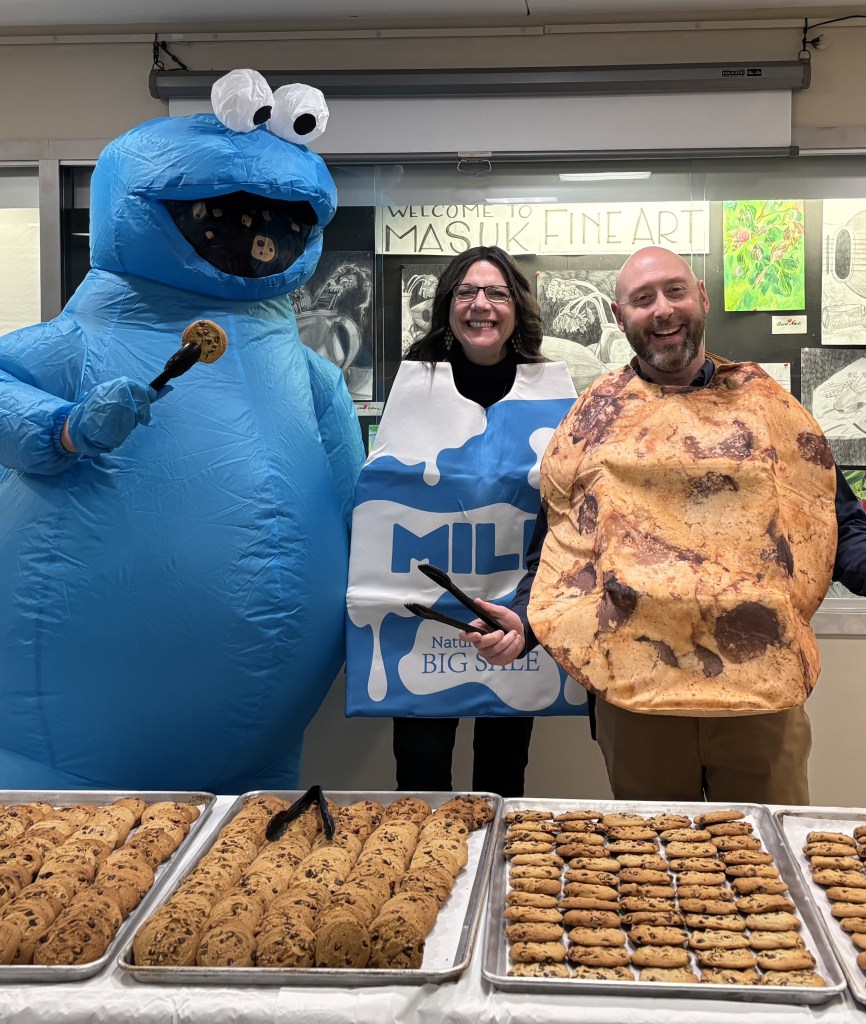
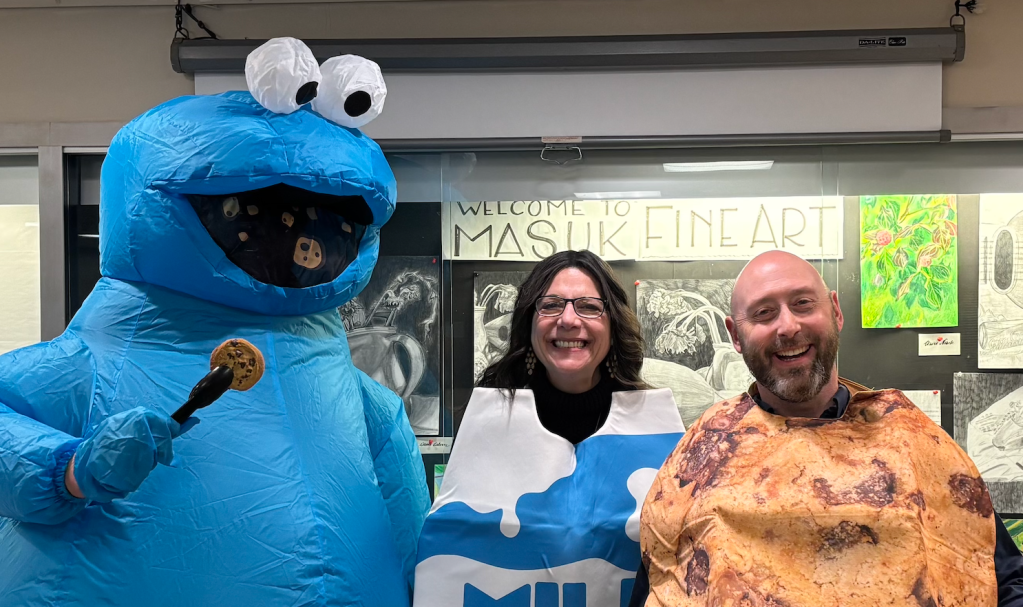
“In fact, they were so popular that was what gave us the idea last year during midterms to have them make a whole bunch of cookies for us,” said Lowell. In addition to the cookies, costumes were worn by each administrator—Mr. Swenson as the Cookie Monster, Mrs. Peterson as a carton of milk and Lowell as a cookie.
While students may only see the cookies for the few minutes it takes to eat them, their unseen journey begins much earlier. “A typical day of preparing the cookies…they start the day before. They come first thing in the morning, and after the ovens get up to temperature, they put the cookies in,” said Larry Luizzi, Masuk’s chef manager. For the students, this process is mostly unknown. For the cafeteria staff, it’s an everyday routine.
The preparation process isn’t the only thing that remains unknown to the students.
“You remember the kids that really wanted the cookie and are upset when they can’t get their cookie, you know? You remember those kids more than the other ones,” said Luizzi.
To those out of the loop, the concept of the cookie being this “great symbol” of community may appear to be silly or contrived, but it offers us a glimpse into the fun and lighthearted culture at Masuk. What started as a routine in the cafeteria became part of the routines of students and staff across our school, creating little memories for each of them.
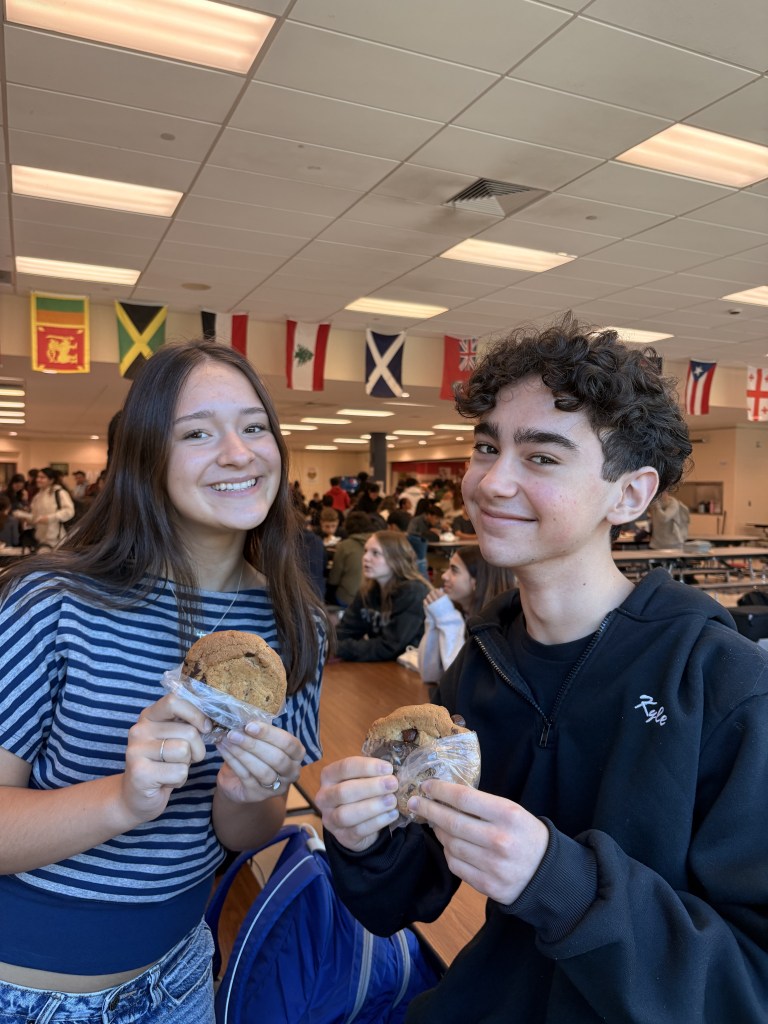
“I think food in general is a great way for people to bond…I like to focus on the similarities that we all share,” said Lowell.
The school cookie isn’t important because it’s a tasty biscuit made out of eggs, flour, and chocolate. It’s important because it’s become tied to countless memories and stories, creating a tradition and a sense of familiarity that is quietly shared among us. Masuk is a school driven by excitement and pride over things that define who we are; the community and memories surrounding the school cookie reflect that. Lowell ties this concept together with a similar notion.
“When you carve into a turkey on Thanksgiving, you remember the previous Thanksgiving, an older Thanksgiving,” said Lowell. The same idea, he said, can apply to a Masuk cookie.
“Maybe eating a cookie at Masuk, it brings you back as a senior to when you were a freshman and you first had cookies.”
Like Thanksgiving turkey, the familiarity behind the school cookie can be less about the treat itself and more about memories attached to it. And perhaps that’s the beauty of it: a student sharing her cookie, administrators handing them out in ridiculous costumes and cafeteria staff remembering those who got upset over not being able to get one. In the end, the cookies are only a small part of the school day, but they are so alongside memories, stories and moments that form the foundation of our culture at Masuk.





Leave a Reply