
An essay that used to take a student about an hour or two to write can now be generated within seconds. Better yet, it can be generated without any flaws or at least very minimal mistakes. How convenient is this for students who want to maintain good grades but lack the time or motivation to fully sit down and think for themselves? Despite how convenient and more productive this may be, it can lead to the deeper question of: “Is it worth it?” “What do I really gain from this?”
The use of Artificial Intelligence has rapidly increased over the last three years, especially since the public launch of ChatGPT in late 2022. A report from the Center of Democracy and Technology found that 85% of teachers and 86% of students used AI during the 2024-2025 school year. And on top of that, it is known that AI has been adopted significantly faster than the use of smartphones, television, and even internet which are already known as the fastest-adopted consumer technologies in human history.
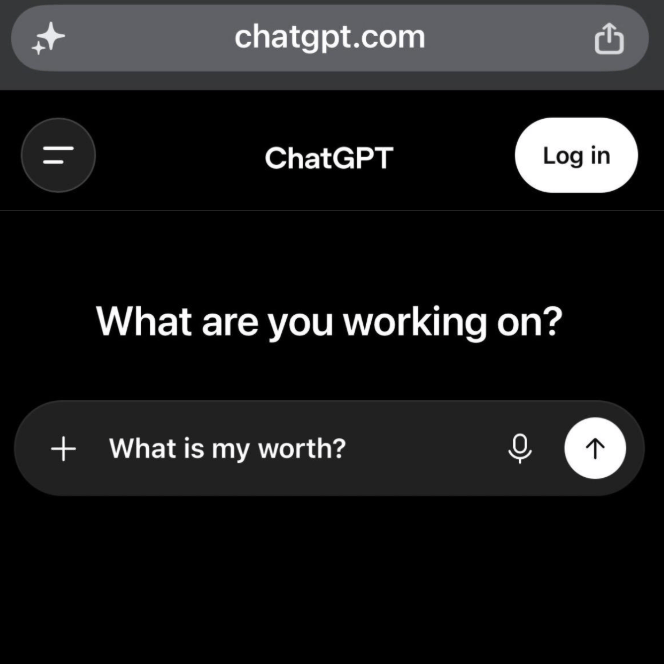
Although AI can be a useful tool it can come to a point where we begin to sacrifice our integrity and authenticity as a student, worker, or person in general. When we turn to AI when assignments or tasks get difficult we become dependent on it and start to lose some of our own abilities and fundamental skills,
“It prevents me from making mistakes and learning from them,” said Katie Marroquin, a senior student at Masuk.
Making mistakes is part of being human and our limits are not bugs to be fixed but rather what it means to be human.
“The chances you make a mistake while using AI is low so doing the assignments without AI will help you learn more,” said Marroquin.
When AI is used to eliminate human weakness, upgrade the body, and transcend mortality, that’s when it can become dangerous
The problem isn’t the use of AI, but what happens when it starts to replace the process of learning. Students have expressed similar concerns, especially about how AI can defeat the purpose of an assignment.
“Even though AI may make it more convenient, the use of AI only defeats the purpose of an assignment in the first place,” said Caleb Drew, a senior at Masuk.
Assignments are meant to give students the chance to practice what they have learned and develop a deeper understanding through the mistakes they make.
“A student’s ability to express their own ideas ultimately benefits them and allows them to discover their own ideas. That is the whole point of doing assignments, to learn and gain opinions and grow yourself as a person,” said senior Hadassah Gee. These concerns raised by Masuk students can point to a larger question: what happens when AI begins to replace human effort and thinking that assignments are meant to develop?
Pope Leo XIV addresses similar concerns in his 2026 encyclical, Magnifica Humanitas, where he examines the effects of artificial intelligence on human dignity and the common good. One of the encyclical’s central ideas is that human worth does not depend on productivity or efficiency. A person’s value is not determined by how much they produce or how well they perform.
This can also tie back to education, where the process of learning and developing your own abilities and skills are valuable within itself.
“I think the use of AI can be used to augment one’s work, but not to replace one’s work,” said Father Joseph Gill, a Priest at St. Jude and a teacher at Cardinal Kung Academy. He explained that AI is most useful when it helps a person develop rather than getting the task done for them.
“AI is a helpful technology only in so far as it helps someone become more themselves.”
This idea reflects one of the central arguments of Magnifica Humanitas: technology should serve the human person rather than diminish what makes us human.
For Masuk students, this challenge can appear in everyday assignments. Choosing between the convenience of AI and taking the time to work through something independently can be difficult, especially when there’s a much faster way to get an answer. Using AI to explain a difficult problem, brainstorm ideas, or help find a better way to approach a problem is different from having it complete the assignment. Several students interviewed for this story have claimed that they see AI as useful when it supports their learning but problematic when it replaces it.
As AI becomes more common in school, students will continue to choose how much of their learning they are willing to give up to AI. The convenience of getting answers within seconds can be tempting, however multiple students interviewed have suggested that there is still value in struggling with a problem, making mistakes, and working it out ourselves. So the question isn’t whether AI should be used at all, but it’s whether we are still the ones learning?





Leave a comment