
Throughout the transitions from elementary, middle and high school, we have all changed as students in many different ways. Some of us went into sports, business chapters, the arts or have created our own clubs.
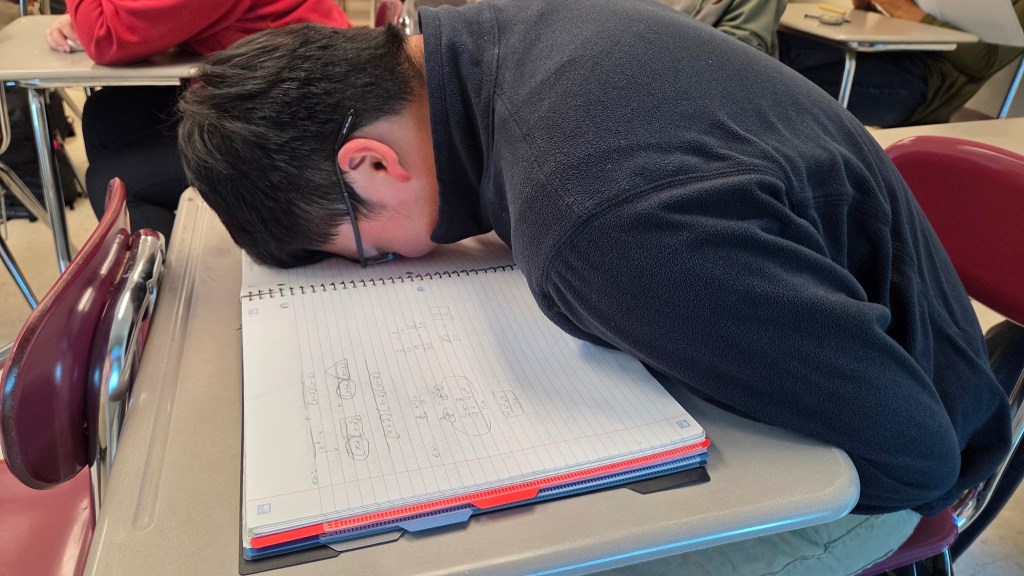
But one thing that has changed for most of us and caused us to disconnect from the classroom: students rarely raise their hands. Now this seems minuscule and unimportant, “why is not raising my hand such a big deal?” It is relevant because you are one of hundreds of students, many in the same class. Teachers are losing participation from their students every year.
But why? There could be a number of reasons: not caring, being scared to talk in front of people, or just simply not knowing the answer. But this makes the teacher’s job even harder and embarrassing. Imagine asking a question, a simple question, and no one is raising their hand. Trying to ask simpler questions is not working and when they call on a student without raising their hand, the student starts to dislike them when the teacher is only trying to do their job.
“In World Lit the other day, (teacher name) kept asking questions and everyone would give him a blank stare, and it got to a point where he had to be like, ‘you guys need to participate because I am not doing the thing where I have to pick people randomly’,” said sophomore Sinead O’Leary.
So this brings us to our question: Why is this lack of student engagement rising in our school? It only comes down to two things: the social media influence, and how our brain works.
The Imaginary Audience, a theory created by David Elkin and Professor Emertius is an idea where pre-teens and teenagers believe they are constantly being judged, looked at and laughed at by their peers. But the truth is, everyone experiences this on their own. It is ironic, actually. The vast majority of students in Masuk have a fear of being judged, even the ones who look confident definitely have one fear or another about being looked down upon.
This phenomenon was present before COVID, but after it was a lot worse.
“Yes, I think that we were more used to online learning where it was so much more of a hassle to like, raise your hand, unmute yourself on zoom, it became so much more of like an issue to participate in class, and I think since Covid I feel like a lot of high school students have become more jaded and cynical and don’t care about participating in school because they don’t want to be here,” said senior Maile Booth.
Students had been hiding behind screens for a year and a half and then were just pushed back into the real world with masks and loss of social skills. They were used to being on mute, staying in pajamas and bed all day for school while barely doing any work. Students were used to not getting up as early, not getting themselves ready, and even just mentally preparing for social interactions. Obviously the transition from computer to in-person was going to have some effects, such as an increased case of the Imaginary Audience.
Another reason why students resist raising their hands is due to how they take advantage of social media. The biggest example being TikTok: this app allows people of all ages to express their daily thoughts, routines, and opinions. With that, there are millions of people on this app constantly everyday.
TikTok is extremely broad with hundreds of millions of people from different age groups using the app. But the main demographic are teenagers. Almost all teenagers from schools across the world have this app in their phones and are on it for multiple hours a day, especially during school. The usage and influence of this app gives teachers added challenges. Kids are easily impressionable, and any video they see can be taken literally, and not in a good way. Especially if teens on this app are listening to radical speakers, dangerous dares or “funny pranks” that are just not funny.
“You know part of our job in the school is to educate the children and just about whatever the topic is, but about social behaviors, when you’re in public and whatnot…and it is rude when someone is talking to someone and they are scrolling and looking…” said history teacher, Brian Humpal. “And not being present when you’re supposed to be present, it’s kinda your job at the moment, and it’s our job to teach it. There is a time and a place for everything.”
Participation has been sorely lacking in our high school and it can be hard not only for the student, but for the faculty too. It is our duty to rise to the occasion, to try and talk more in class, because as painful as it might sound, we need to participate to get the full learning experience. If need be, try and talk to your teachers and explain why it could be hard to answer in their class. As people, we are all learning every single day and participation is key.



 Masuk Free Press
Leave a reply to Ryane Nelson Cancel reply