
Imagine craving an ice cream cone, or a sandwich, but you can’t eat it. Either you are allergic to dairy, or gluten or something else entirely that makes your life harder.
“The biggest hardship is not really about eating peanuts specifically,” said Masuk junior Dan Fontana, “it’s when they sneak it into other foods and missing out on foods like Snickers or Reese’s.”
These food allergies are never fun, and they have become more common as time has passed.
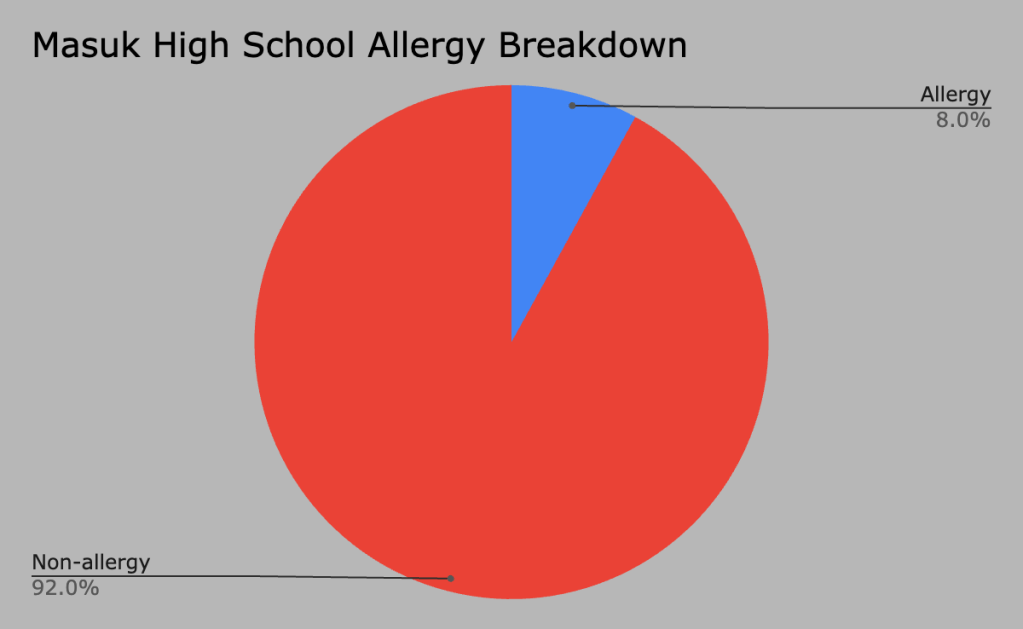
“Approximately eight percent of our student population or about 80 students here at Masuk do have a food allergy,” said a Masuk nurse Karen Julian.
Many students attempt to manage their food allergies as best as they can, but reactions can still occur, and be very dangerous.
“It happens every school year, at least two times every school year,” said a Masuk nurse, Lisa DeRosa.
- Identifying Ingredients
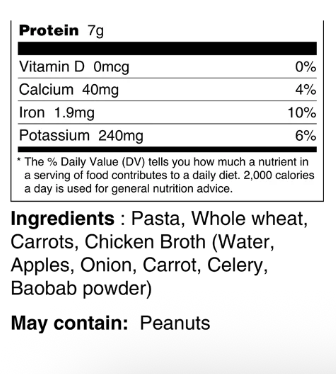
Allergens are always listed on food labels, and if you are not sure of an ingredient’s contents or origin, looking it up online through a reputable source will be a telltale sign. However, as a general rule of thumb, never eat anything that you are unfamiliar with, no matter what it looks like.
Even foods that feel safe can become dangerous because sometimes companies change packaging and ingredients, adding new components that weren’t there beforehand.
“We had a student who brought food from home, and it was something he ate all the time,” said DeRosa, “but he didn’t read the label, and [the manufacturer] changed one of the ingredients. So sometimes it’s not the food, it’s the packaging and the labeling.”
In the Masuk cafeteria, food is generally safe but it is always a good habit to double check if you are unsure.
“Once I make the menus, the menu itself is always posted,” said Tim Quartuccio, a school cafeteria executive. “Anyone at any time can look at it, click in the box of what that specific meal is, and you can see the list of allergens.”
The menu that Mr. Quartuccio refers to can be accessed through the school website. Navigate to food services, click on the lunch menus link, and the FD meal planner is available upon clicking the tab (click here to see the menu).
Additionally, some allergens are where you would least expect them.
“Sometimes fried foods and baked goods can be dangerous,” said Julian, “fried food sometimes could be fried in sesame oil or peanut oil and then baked goods there can be ground up nuts in the flour.”
- Severity and Symptoms of a Reaction
Allergies range in severity from mild to severe. Common symptoms of an allergic reaction include: skin irritations and respiratory or stomach issues. Multiple symptoms can happen at once, and they can appear at different times. It can be very useful and lifesaving to let your friends and family know about your symptoms and modes of remedy so they can assist you in an emergency. Food allergies have a wide range, as one could be allergic to anything.
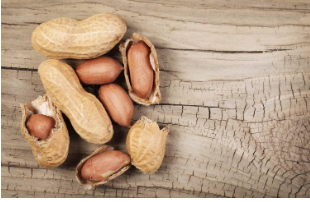
“Nuts are our biggest allergen,” said Julian.
- Cross-Cantamination prevention.
In a school environment, cleaning your area if excess food is there is good practice. It is important to do this because cross-contamination, where food that appears safe comes in contact with an allergen, causing an unforeseen reaction, can happen under the radar. An example of this is having a candy bar that appears safe, but is not because it is manufactured on the same line as peanut butter bars. Another example is touching a surface that has an allergen on it, then proceeding to eat without cleaning hands.
“Tables are wiped down between lunches,” said Masuk Assistant Principal Ian Lowell, “But there’s not a lot of time between lunch waves.”
Touching a table that hasn’t been cleaned can still result in reaction caused by cross-cantamination. Also, wiping your hands before eating is good for eliminating germs as well. Even though tables are wiped down, cross-contamination can still happen and be very dangerous. One can even make an argument that the most dangerous part of having an allergy is keeping track of cross-cantamination.
“We always tell students not to share food with their friends,” said DeRosa.
Some ingredients in other foods are unknown, so it’s best not to take that risk.
- Coming in Contact with Allergens
Unfortunately, food will most likely come in contact with you one way or another. It’s impossible to stay out of an allergen’s way forever. If you are ever caught in the crossfire of food being thrown, or you come in contact in some way with an allergen, there are a series of steps you can take to avoid danger. If the food makes direct contact with you, immediately leave the cafeteria and go to the nurse. Then, identify any possible reactions that could have resulted from food hitting your skin. If you are having some sort of allergic reaction, the nurse will have the necessary medication, but it’s extremely important to carry your own.
“[It’s very important to carry allergy medication] in high school because it’s a big building,” DeRosa and Julian, “we do keep back up here, and if you have two sets, that’s ideal. So, you’re always covered.”
If in a rare case someone purposely threw food at you and you are in the clear and safe, tell an adult at the school. Never be afraid to stand up for yourself in these situations, as there can be very serious effects from what seems like a simple joke.“You definitely shouldn’t run away or be ashamed or embarrassed,” said DeRosa and Julian, “because we would check you out, whether you have a food allergy or not, it’s really important. It’s lifesaving.”
The adult will always keep you anonymous. If someone was ‘joking’ or accidentally hit you, just be honest and if you’re absolutely sure that letting an adult know is unnecessary, then trust your intuition. A lot of these situations are based on instincts and trusting yourself.
“We can only handle the problems that we know about,” said Lowell. “I would hope that that student would come to a trusted adult and report it through anonymous alerts so we could deal with the situation.”
Furthermore, if the food you come in contact with is not something you are allergic to, a nurse trip probably isn’t necessary, but listen to your body. In potential situations where food is being thrown, never throw back food. If the people that throw food start throwing different foods, there is more chance that the new food may be something you’re allergic to. Simply move out of the way and cover your food up so you can protect it and not risk contamination.
- Necessary Treatment and Anaphylaxis
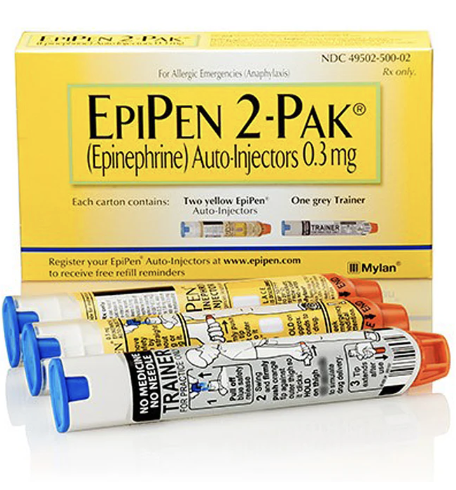
For the final and most important tip that will save your life in an emergency: carrying and knowing how to self operate the proper medication.
“Always carry your EpiPen,” said Fontana, “it fits in your pocket, or you could throw it in your backpack.”
As mentioned before, there are many different kinds of food allergy reactions. However, the most dangerous and fatal one of them all is called anaphylaxis. This is when the airways in your lungs can become restricted, and your blood pressure can drop dramatically, leading to what is known as anaphylactic shock. Administering an epinephrine dose via an EpiPen is completely necessary, and calling an ambulance is also mandatory in these situations.
“If you know you had your known allergen and ingested it, there’s less time,” said DeRosa and Julian, “If it’s an airway issue and they can’t breathe, or anything respiratory, that’s when we would give the EpiPen.”
In non-anphylactic situations, there can be other means of treatment.
“I’ve seen it where nothing progresses, and they stay with an itchy throat or the hives,” said DeRosa, “sometimes it goes away, or will give Benadryl, and that’ll take [the reaction symptoms] down.”
Prevention is critical, but proper preparation is lifesaving.
“The most important is that [people with allergies] always have medication on you, at all times,” said Julian, “if you’re self-care make sure you have current orders and meds with the nurse’s office.”
Once again, these topics are never fun to talk about, but they’re very important to raise awareness.
“It’s a lot more serious than people actually think,” said Quartuccio.
Luckily, recent developments have led to doctors recommending among infants to consume common allergens at an earlier age, contrary to waiting until they are toddler age. This, according to Julian, has led to less allergies.
“It’s kind of swung the other way again, because now the pediatricians are saying, start the exposure at a younger age,” said Julian.
If you would like more information, looking at websites like the American Red Cross, the FDA, or the CDC will give you more specific information. Their websites will be linked below. Also, cafeteria staff at Masuk are also available. Researching more symptoms and how to administer medication can not only save your life but it can also save someone else’s. Always use a reputable source when researching these topics online, and clarify with your doctor if need be. Happy safe eating!

 Masuk Free Press
Leave a comment