
As of now, the average gap between seasons for a show is around three years, which is an outrageous amount of time for a Hollywood-scale television series.
“When the Pandemic began in early 2020, production of any entertainment ceased. This not only prevented new series from being filmed, but halted projects that were in the middle of being made.” Says Megan Hemenway from ScreenRant.com.
Two years ago, in May of 2023, the Public Health Emergency of International Concern declared the end of Covid 19 as a pandemic, but the state of film remained slow.
Just as the pandemic was deemed no longer an interruption to production, a new problem arose: on May 2, 2023, 11,500 screenwriters participated in the 148-day SAG-AFTRA/WGA labor strike, refusing to go to work, essentially putting the film industry on pause once again until Sept. 2023.
“After five months of intense negotiation, a tentative agreement between entertainment companies and the unions representing film and television writers marked the end of the first work stoppage in Hollywood in over a decade,” said Hailey Hourigan from Fordham Journal of Corporate & Financial Law.
Why is it a bad thing when there are significant gaps between productions?
When shows take too long to release new seasons or movies in their franchises, they risk losing their established viewership. Fans don’t want to wait three years just for eight episodes of a show they now barely remember the plot of. This jarring gap between content discombobulates the viewer and their remembered perception of the show and its storyline. Messages get misunderstood or lost in translation due to delays and inconsistent release schedules.
“It does make me forget things, and it makes me have a disinterest in the show because it takes too long.” Said Masuk Senior Carson Noack.
A very popular show in question that fell victim to this is Stranger Things.
Written by the Duffer brothers and picked up by Netflix, the show’s first season was released on Jul. 15, 2016, followed by season two, released only a little over a year later on Oct. 27, 2017. The gap between seasons became noticeable when the third season took almost two years to air on Jul. 4, 2019. Then, during the pandemic, the show faced its most significant delay, taking around three years before it began airing episodes.
“The gaps between each season of Stranger Things have become notoriously long, with fans (and some that have become ex-fans) continuously expressing their outrage at Netflix over the excruciating wait,” says Federico Furzon on Movieweb.com.
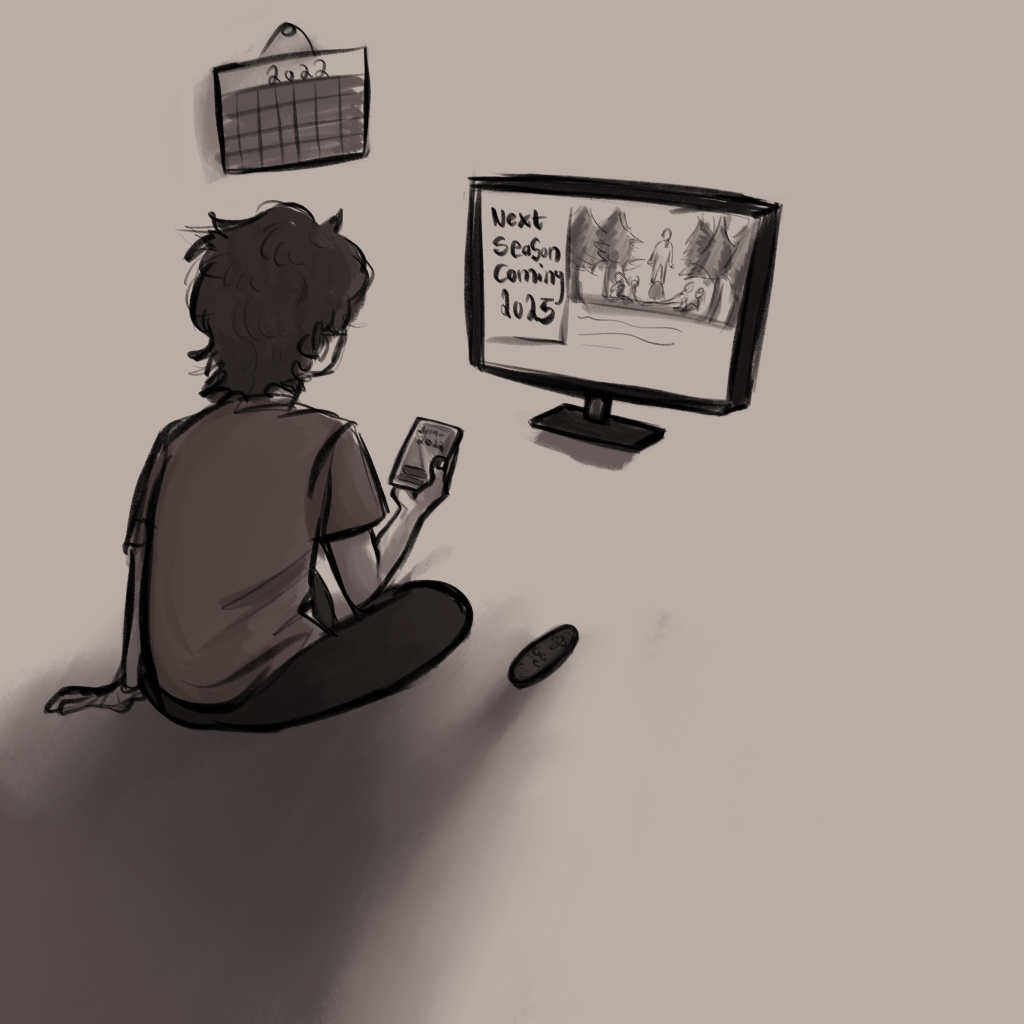
“It’s really hard because like, it’s like ‘oh my gosh, I can’t wait.’ But eventually I just find something else to entertain myself, and then I forget it exists until it comes back.” Said Masuk Senior, Holly Torigian.
As of now, Stranger Things has just aired its fifth and final season, over three years after the end of its fourth season.
The show primarily follows a group of middle schoolers as they transition to high school. With the jarring amount of time between seasons, by the third season, the characters no longer look their age. Season three was already pushing the limits for 16-year-olds who were playing 13-14-year-olds. Still, when the supposed-to-be eighth graders from last summer are now meant to only be halfway through their freshman year of high school, they really shouldn’t look like they’re actually halfway through their freshman year of college.
Granted, considering the state of the world, there wasn’t much that could be done about that, but that doesn’t negate the continuity issue that arises from this when so much time has passed between any previous content and the teen characters all suddenly look like adults, because their actors now are adults.
Holly said, “It does throw me off. Especially if they’re, like, supposed to be really young.”
Excusing the impossible circumstances, the Duffer brothers themselves have spoken of their preference for longer wait times between shows.
“Fans of Stranger Things have changed their opinions on the show, saying that they no longer care about the show and that it’s like waiting for a whole new TV show. While the Duffer brothers said the delay was not accidental, having fans wait for a highly anticipated show kills the momentum and hype for people to continue talking about the show and hyping it up.”
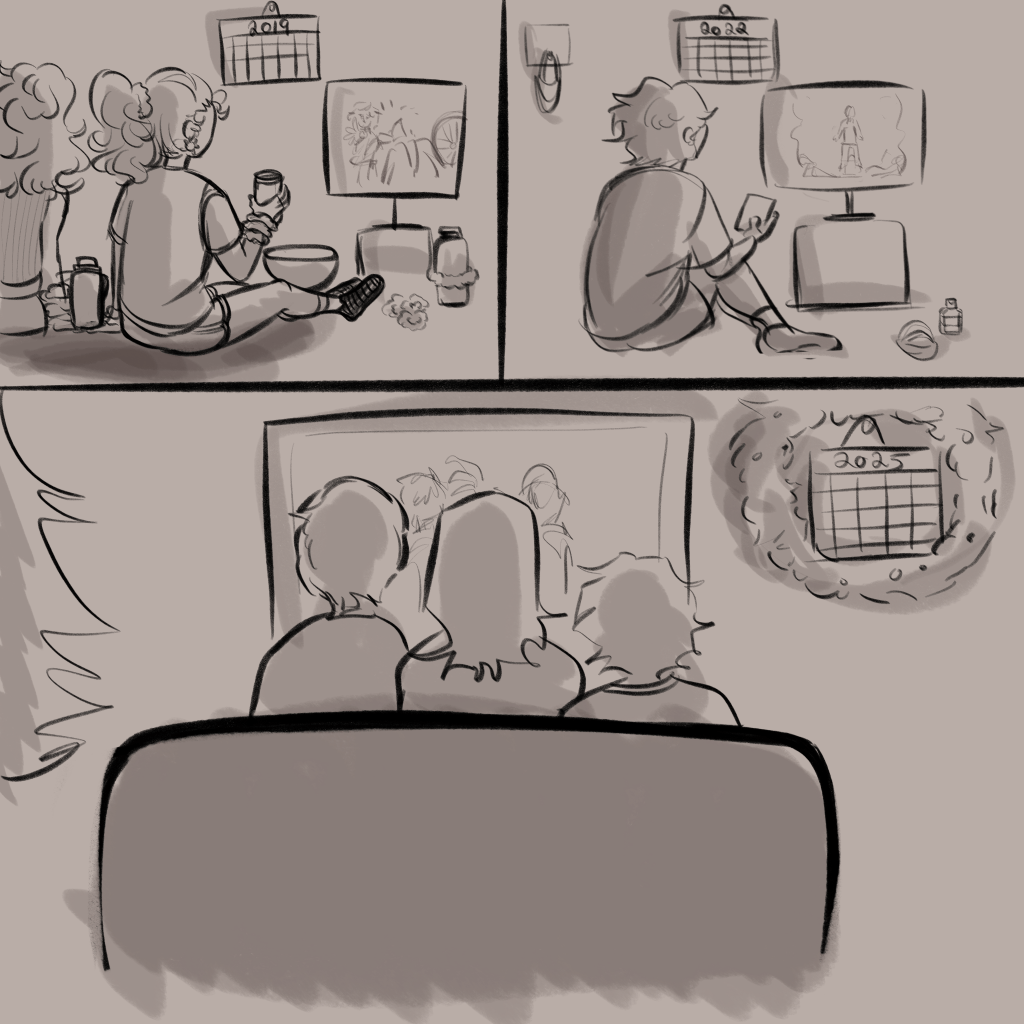
“I think it took forever for season 5 to come out, and then by the time it came out, I had completely lost interest in the show.” Said Gabbie Forbes, a senior at Masuk.
Regardless of whether the viewer is a die-hard fan who’s been watching since the very beginning, newcomers will still have to deal with the confusion of seeing the characters look exponentially older from season to season, even though, in the show’s timeline, it’s only around a year’s difference.
“They don’t fit the character as well anymore.” Said Carson.
Consistency allows for digestible content; inconsistency invokes confusion. Not all fans re-watch every season of a show before watching new content; key information introduced earlier in the show can easily be forgotten during the wait. Hard work set up from the beginning can easily be swept under the rug because the fans have no recollection of it. It’s a setup for disappointment, for the fans and the creators.



 Masuk Free Press
Leave a comment