
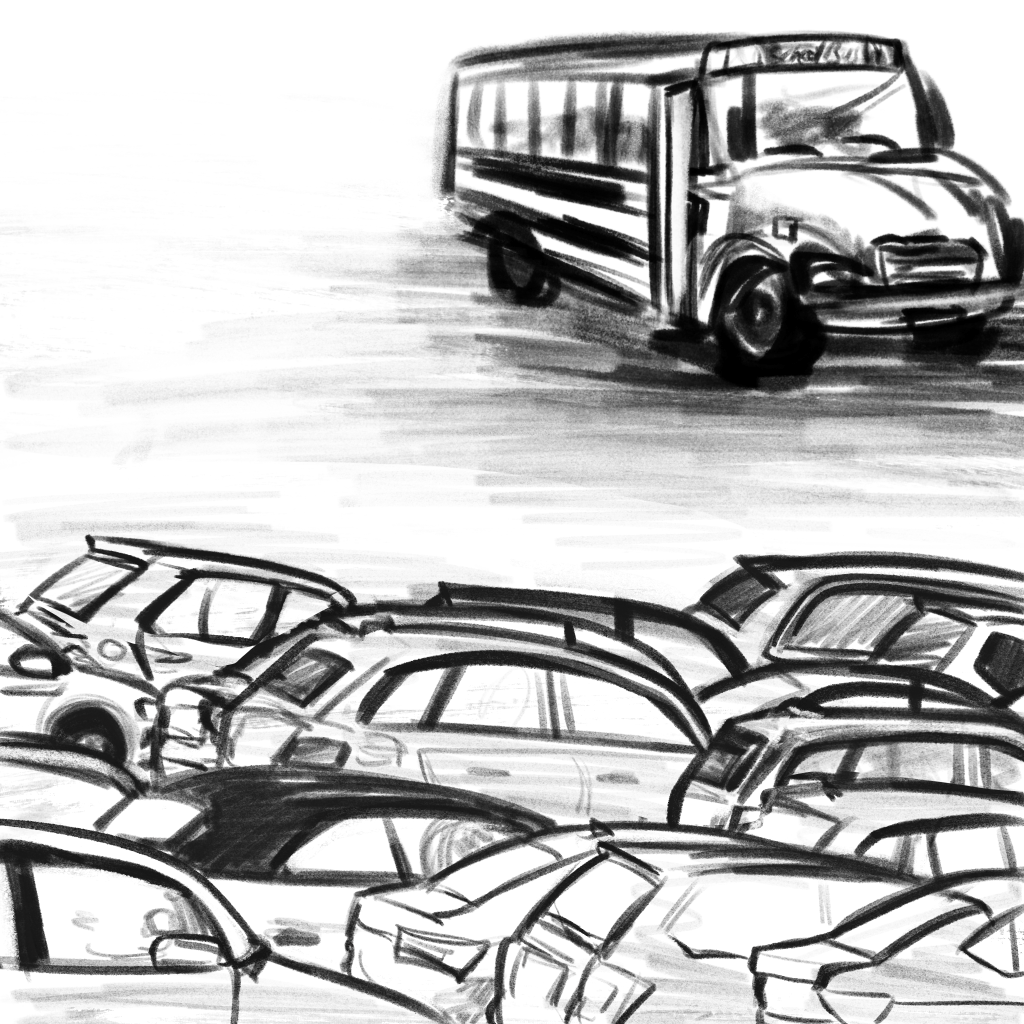
Another school year has started, and the parking lot continues to fill with newly licensed students in their cars. Buses are getting emptier, as it seems like everyone old enough to drive, is doing so. But the question is: should that be the way things are?
It has become very apparent that many Masuk students use their own cars to get to and from school. Why is this? Why did the student populace choose driving over taking the bus anymore?
“My mom convinced me to drive to school on the last day of junior year. It wasn’t so bad I figured to get more practice and I could start driving to school every day” says Masuk senior Nicole Wellington.
She says, “I feel like a bit more free technically. I can wake up whenever I want.” and “I like the independence. I like getting to like, blast my music.”
A big factor that has a significant impact on the whole equation of driving is how often one drives.
Nicole says, “Pretty often because I have to go to work. I work like four times a week, usually three to four. So I drive at least- I drive every day pretty much.”
Then there is the impact of how often one fills up on gas. Nicole says, “Not too often,” – “But usually, like $20 of gas, like the gas station I go to is enough to last, like, more than a week, maybe like two or three.”
“The day I got my license, I started driving to school,” says Masuk Senior Joy Bray.
She says, “I like it more than the bus, and I can listen to my music, and I can sleep in a bit more,” and says she fills up on gasoline “Every two weeks.”
Is the independence and comfort of driving oneself in their own car worth it over the pollution that the trip to and from school will eventually build up? This isn’t a blame game, this isn’t supposed to be pointing an accusatory finger at all students who drive to school, what this is supposed to be is a cause for everyone to look outside of themselves and at the very least, be aware. It may not seem like much, but if a single person just tries to limit the amount that they drive, utilize the public transportation provided by the school, they’d be one less person contributing to the rapidly increasing harm to the environment. It is often assumed that as only a single person the change one makes will not matter in the grand scheme of things, but every movement needs a tiny spark.
“I think the current state of the environment is kind of depressing” says Joy, “I think that bad things are going to happen to our lungs because of like, air pollution and stuff and I’m very concerned,” she explained that it “seems kind of depressing because there’s like trash everywhere and stuff like even in my pond, like in the pond outside my house there’s like trash.” recounting her personal experience with the community’s lack of care for the wellbeing of the ecosystem.
Nicole says, “I am a little concerned, at least for the environment in our area, I know in some places, like cars aren’t used as much,”
For every mile a single person drives, their car emits approximately 400 grams of CO2, that’s 4.6 metric tons per year.
According to the EPA’s Green Vehicle Guide, “every gallon of gasoline burned creates about 8,887 grams of CO2” They provide that “in addition to carbon dioxide (CO2), automobiles using gasoline produce methane (CH4) and nitrous oxide (N2O) from the tailpipe and all vehicles can emit hydrofluorocarbon (HFC) from leaking air conditioners. For gasoline vehicles, the emissions of HFCs are small in comparison to CO2; however, the impact of these emissions can be important because they have a higher global warming potential (GWP) than CO2”
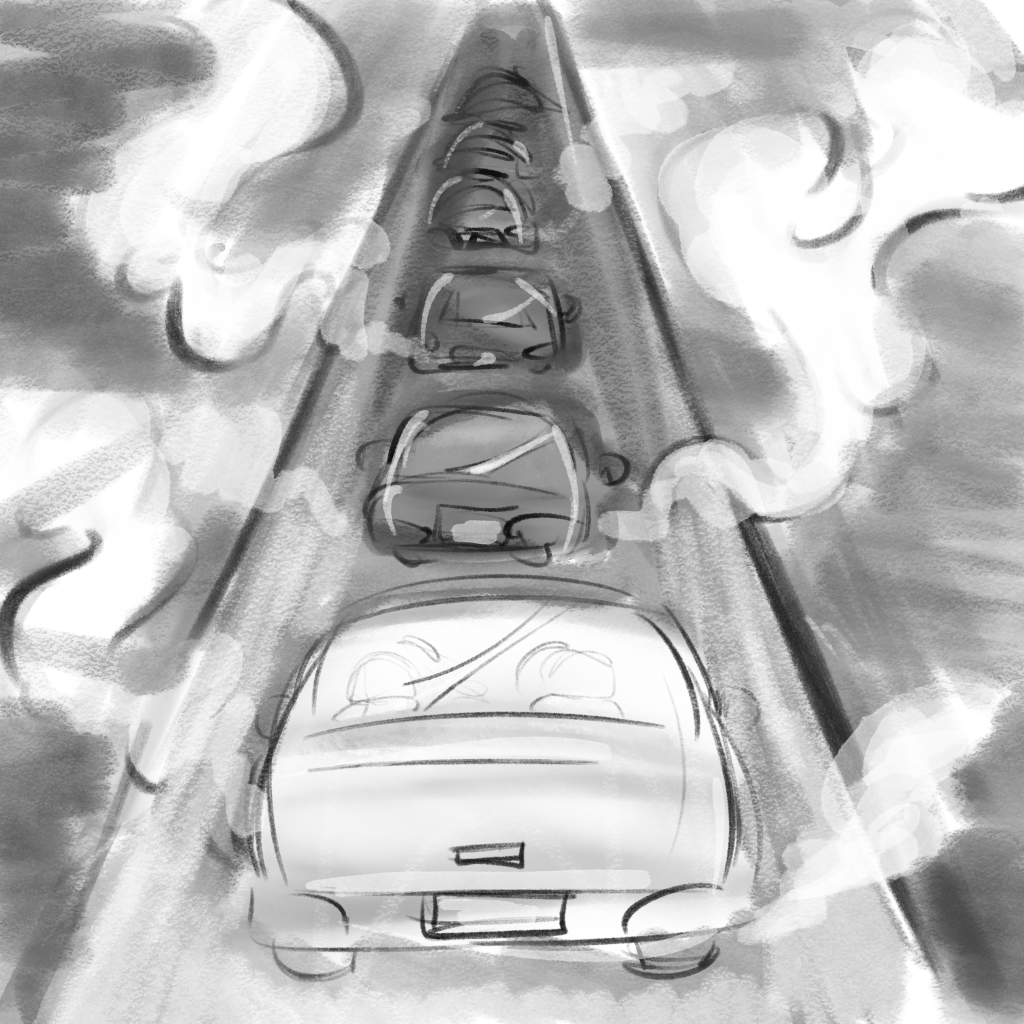
Both Nicole, and Joy informed me that they refill on gas around every two weeks, which would mean they burn a half a tank or more every two weeks, and a half a tank is around 6 gallons, meaning, generally speaking, they each create 53,322 grams of CO2 every two weeks. Together they create 106,644 grams of CO2, now imagine that multiplied by however many other students who are filling up on gas every two weeks, it’s undeniable how that will add up. This also could be a larger number depending on the capacity of the gas tank, considering not every car has the same capacity, so not every student may fill up on the same amount of gasoline.
Coltura, on “Pollution from vehicles” brings up the point that, “Burning gasoline and diesel for transportation is the biggest source of carbon emissions in the United States, accounting for about 31% of total U.S. energy-related CO2 emissions.” Which becomes gradually concerning once it is taken into account that “A carbon dioxide level of 350 parts per million (PPM) is considered safe for humans to thrive on earth. Currently, the level is 424 ppm and rising quickly.” There is clearly a very real crisis we are having across the globe, the temperatures are out of control, rising and falling drastically, as a direct result of people, so why doesn’t anyone around try to do anything about it?
“Knowing this about the environment and stuff, it kind of makes me think, like, oh, maybe I shouldn’t drive as much and maybe I should ride a bicycle, kind of like they all do in Copenhagen,” says Joy after learning the effects of her driving, but would she change anything about her habits?
“I’d like to say yes, but I feel like driving is so convenient that it’s like, I don’t know. Maybe in the future I’ll get an electric car, actually.”
That seems to be where the problem resides for people, the convenience of being able to have total control of when and where they can go, outweighs the alternative of using any substitute motives of transportation.
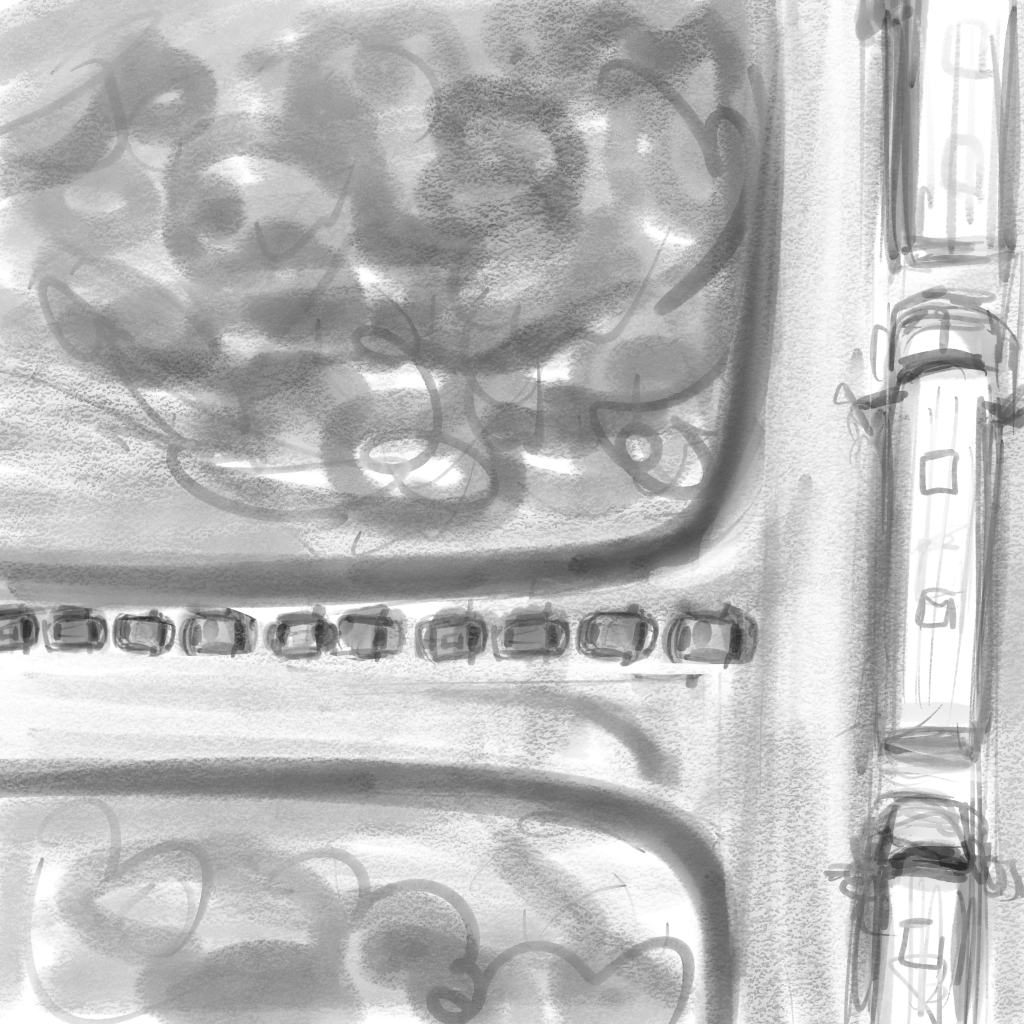
It does not go unnoticed that a lot of students who drive also work or do sports. They need the car because they don’t have someone available to drive them, and considering how Monroe isn’t exactly the most walkable town, to not consider that would be unfair.
“I work like four times a week, usually three to four, so I drive at least, I drive every day pretty much,” says Nicole, her only way to get to her job is to drive herself.
What needs to be considered however, is that, if someone truly cares about the environment and they don’t have work or some constraint immediately after school that would warrant them needing to personally drive themselves, it would be beneficial if they could make more use of the school buses. If just some students did as much then the parking lots would be less crowded, the air would be cleaner, and a group effort could be started towards the betterment of the environment, uniting the community for a good cause here in Monroe.
It doesn’t have to be a huge reformation of the average student’s life, even just trying to utilize the buses or walk sometimes rather than driving themself places, if everyone tries to make a change for the better, real improvement might actually occur.



 Masuk Free Press
Leave a comment