
The Ultimate Fighting Championship (UFC), often dubbed the most violent sport on Earth, has been operating for the past 32 years, bringing non-stop martial arts entertainment to its viewers. This means that the event and Mixed Martial Arts as a sport, in general, have gone through an array of trends. There have been generational fighters like Jon “Bones” Jones and Connor McGregor, both nearly household names despite the relative obscurity of the sport. There have also been exceptionally popular fighting styles, with the UFC showcasing their evolution over the years. Currently, the UFC is being dominated by one style of fighting, hailing from one somewhat unknown region: Dagestan.
The Republic of Dagestan covers an area of 19,000 square miles (about the size of four Connecticuts), and is home to 3.1 million Russian citizens. Despite its small size, Dagestan has produced a disproportionate number of Olympic champion boxers, wrestlers and, more recently, UFC Champion mixed martial artists. Examples include retired and undefeated lightweight champion Khabib Nurmagomedov; his three cousins Umar Nurmagomedov, Usman Nurmagomedov and Abubakar Nurmagomedov; Khabib Nurmagomedov’s training partner Islam Makhachev; and most recent light heavyweight champion Magomed Ankalaev. All of them are extremely talented fighters, who, more often than not, find themselves simply in another tier when compared to their opponents.
However, a concern has arisen when it comes to these Dagestani fighters. No matter how skilled they are, does their grappling-focused style fail to make entertaining fights? Could their domination spell the end of the UFC, who make the majority of its profits from Pay-Per-View?
UFC fan and senior Carter Smetak had some relevant thoughts on the recent, controversial matchup against Dagestani fighter Ankalaev and fan favorite Alex Pereira: “It just was a slow fight. You can’t make money off fighters like that.”
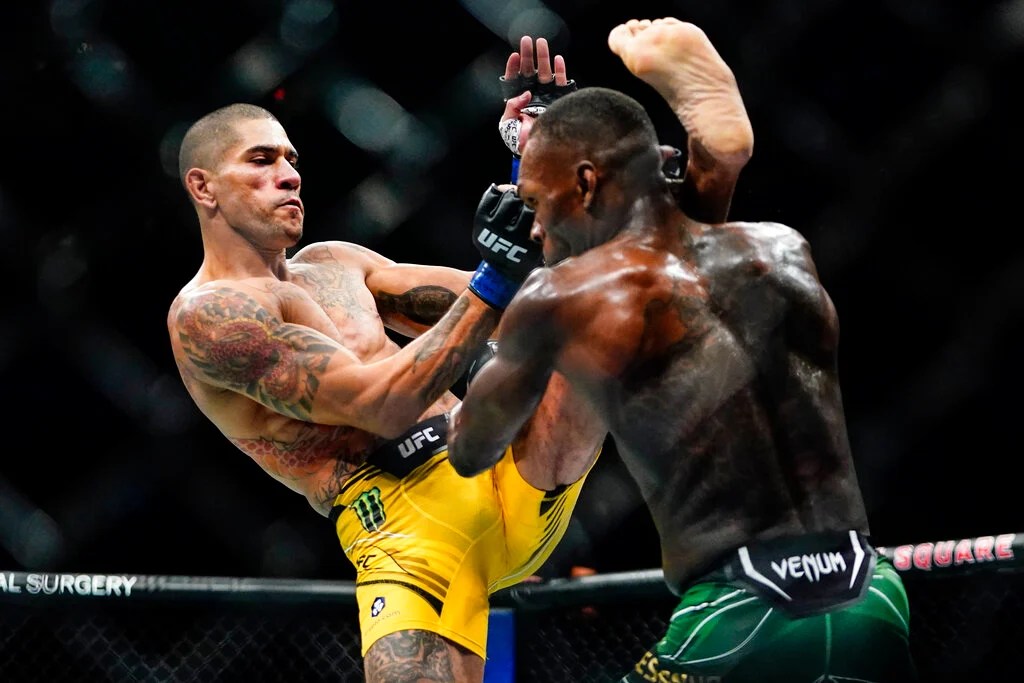
“And I guess you could say, ‘yeah, well, he was dominating the whole fight’ or ‘he was controlling the fight’ but no one wants to see it. UFC is a business at the end of the day, and you can’t have champions that no one wants to watch,” said Smetak.
Watchability is a big concern for this demographic of the UFC fanbase. When they see fighters like Ankalaev slowing the fights down with their techniques, they feel robbed of the money or time they spent watching.
“They’re just decision merchants [fighters who never achieve knockouts, and only win by decision] or really, really slow,” said Smetak. “They emphasize wrestling and it’s tough to watch, and you can’t sell Pay-Per-Views when you have guys holding other guys against the cage for five minutes on end.”
This same faction of UFC watchers is even floating potential rule changes to counteract this new generation of grappling domination. These suggestions include scoring adjustments to better reward takedown defenses and other broad scoring changes to discourage “boring” techniques, all for the sake of improving the long-term health of competitive MMA.

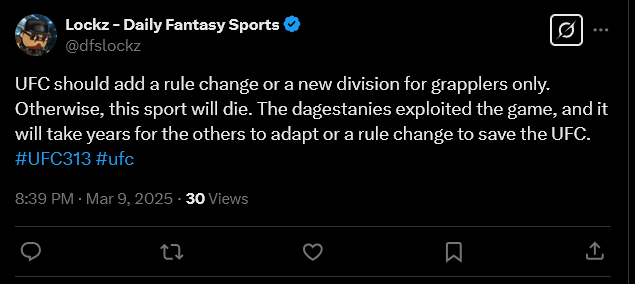
On the other hand, many fans do not see the point in punishing good fighting strategies. Overbearing rules and restrictions have the potential to do just as much harm as the opposite. When creating a tournament to find the best martial artists in the world, does it really make sense to pick and choose what skills are appropriate?
Senior Chris Bouton said, “I don’t think you should change up the rules just because, right now, a certain type or group of fighters is dominating the UFC.”
He continued, “I don’t really enjoy watching it all that much as opposed to a good striking fight, which I’d rather see. I’m sure that’s how most people feel as well, I don’t think anyone really is like ‘ooh, great, a Dagestani fighter! Time to watch a “ground and pound” the whole time.’ But, that’s how these people were raised, that’s what they were taught… I mean, who are we to blame them for doing what they’re good at?”
And Bouton is far from the only one who sees the issue this way:
“We could have champions that are all around good fighters, champions that are really good at striking like Pereira, or ones that like to take guys to the ground. If you’re from Dagestan, that’s what you like to do. That’s why I’m a fan of the sport. I like to see champions who have their own specialty and can really capitalize on their own skills,” said junior Ricardo Texeira.
For better or for worse, Dagestani fighters are skilled at what they do. Ankalaev pretty definitively controlled much of his matchup against Pereira. But an argument is to be made as to whether or not control is worthy of a victory.
“Putting me up against the cage, he didn’t really do anything,” said Pereira following his loss. “Giving him the win with a gameplan like that, it incentivizes people to do that.”
Whether or not Pereira’s recent loss is indicative of a persistent problem plaguing the UFC is yet to be determined. What is known, however, is that many people are disheartened by the recent events. Will the UFC continue to bring the top-tier MMA entertainment that it’s known for, or will it succumb to overregulation, boring athleticism or something else entirely? In the end, if nothing else, Dagestan has proven itself as a breeding ground for these champion fighters.
Dagestan’s own Islam Makhachev may explain this phenomenon best: “You want your son champion? Send him 2-3 years to Dagestan. Forget.”



 Masuk Free Press
Leave a comment