
Not living up to your greatest potential is the worst thing you can do in a capitalist culture that thrives on gross productivity. So, we have engineered a torture trap for ourselves which combines the American need to succeed with our fondness of large celebrations: the New Year’s resolution.
Of course, you think you’ll finally achieve something noteworthy this year. It’s January, you’re fresh off break and you have all the motivation in the world. But what’s that I hear? It’s you from last year, declaring the exact same thing. Resolutions are jotted on a piece of paper that you put away with the rest of your winter things, then don’t think about until it’s time to unfold in the next year. There is no constant reminder of what you claim to strive for, no reinforcement. This means that writing down resolutions is not a productive exercise. All it does is serve as a source of guilt when you look back and realize that you have done nothing that you said you would.
“I didn’t make a New Year’s resolution,” said senior Taylor Brunelle. “It would just set unrealistic expectations for myself.”
It’s not even as if this guilt serves a purpose. You can have a good year without fulfilling resolutions. The regret only kicks in after setting a pedestal in front of yourself that you’ve failed to climb onto. There is no sense in putting yourself in a position where you will undoubtedly feel bad. Despite this, a consistent influx of people sign up for gym memberships at the dawn of a fresh year. “In a 2017 survey of nearly 6,400 fitness clubs in the U.S., the International Health, Racquet & Sportsclub Association found that 10.8 percent of all gym membership sales in 2016 took place in January,” Bloomberg, a data and media company, wrote, “which is proportionally more than any other month that year.”
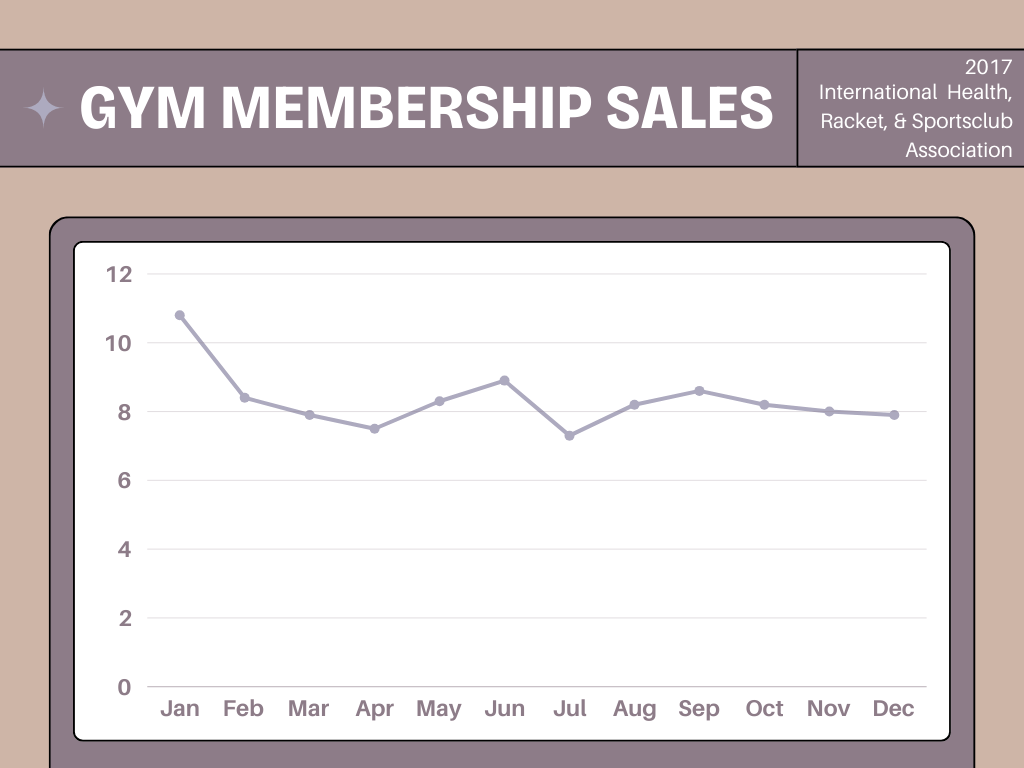
These very same devoted gym-goers appear less and less as the months crawl by. Why? Because they’re losing steam. By the time March rolls around, January seems so far off. The guilt of another year of failed resolutions means nothing anymore. “I’ll do it next year,” they say. Every. Single. Year.
It is excellent to have this intention of becoming a better person. Yet when you look at the resolutions that you’ve penned over the years, how often do you write the exact same thing, over and over again? If you cared enough to actually complete your bucket list from Hell, you would not just be preaching your alleged future plans at the beginning of the year. Unless it was truly a coincidence that you happened to have the idea to start a habit on the first day of a shiny, new year, you’re fooling yourself.
Now, I sound very doom and gloom about this. However, there’s good reasoning for me to have adopted this way of thought. CBS News reported that, “While nearly half of Americans make New Year’s resolutions, only about 25 percent of people actually stay committed to their resolutions after just 30 days, according to Columbia University. And even fewer, less than 10 percent, accomplish their goals.”
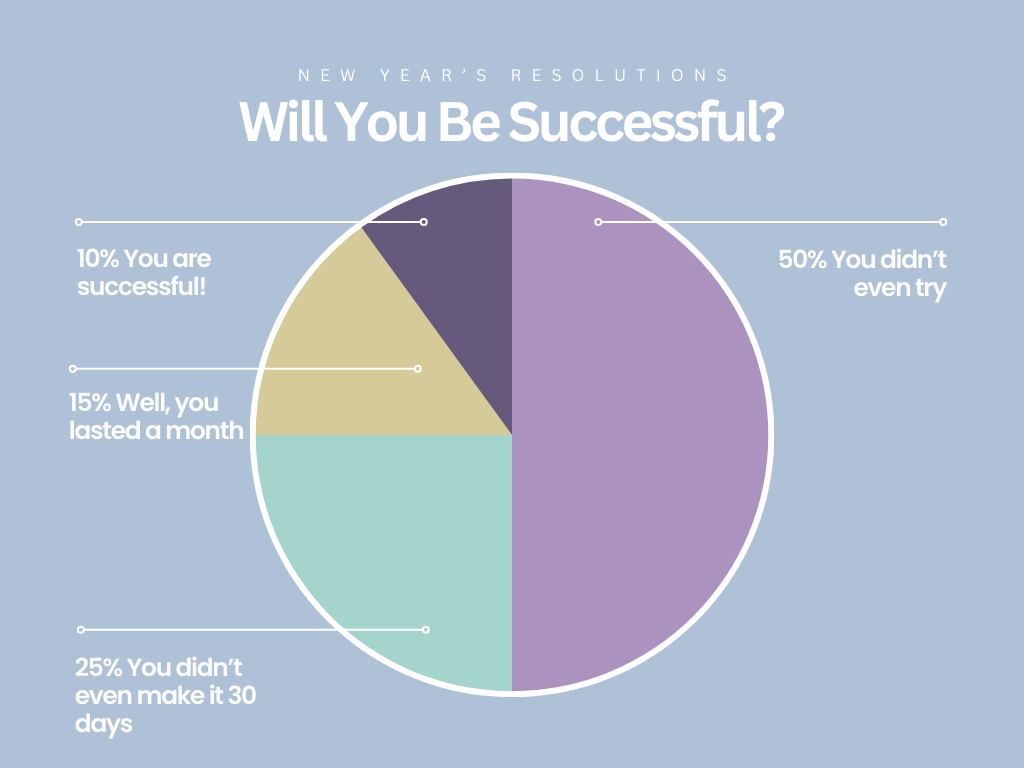
My lovely reader, you must understand how low these statistics are. An average person would not even consider applying to a college with an acceptance rate in this range. If you don’t think you have the capability to get into some of the top colleges in the world, what makes you think you’ll beat the odds and be part of the 10 percent of Americans who actually follow through on their resolutions?
I’m not here to preach a future of darkness and failure, though. I am proposing an alternative to the guilt that you inevitably face come December. In theory, resolutions are goals. In practice, they’re far from it. The whole institution has taken on a different meaning in New Year’s celebration culture. When you make a resolution, you’re essentially saying, “I resolve to do better.” But the thing is, resolutions don’t have to be serious. Nowhere is it written that you need to move mountains with your aspirations. You won’t burst into flames if you don’t have expectations the size of Everest. Who died and made the decree that resolutions have to be personal projects that you’re putting blood, sweat and tears into? It’s fine if you’re not curing cancer or hiring a life coach.
You should be having fun with it. The spirit of the resolution should not boil down to “what new ways can I guilt myself into feeling like a bad person?” You’re better off putting things on that list that you actually care to do. The effort to consistently go to the gym or watch what you eat is staggering. Those who genuinely want to fix themselves aren’t doing it because of their New Year’s resolution. Genuine improvement is motivated by something stronger than “this year, I will lift more.”
If you can’t make it over a molehill, there’s no logical reason to be looking at a mountain. Set small goals for yourself that you have the motivation to act upon before getting too crazy with your plans for the future.
Happy New Year from the Masuk Free Press, and if you choose to not take any of this to heart, may you be part of the 10 percent.



 Masuk Free Press
Leave a comment