
Like many other seniors, I missed the eligible voting age by mere months. Understanding how critical this election would be for my education and future, I lamented this fact. It felt like everywhere I turned in person and online, I was pummeled by political information and daunting policies that would threaten the integrity of our political system. Unable to vote, I felt hopeless. Knowing that all of these issues were going to affect me, my family and my community, accepting that I just missed the mark to make my voice heard was agonizing.
On one of my TikTok doom scrolls, I came across a video of a woman phone banking for the Democratic National Convention. Phone banking is a way of canvassing for candidates over the phone and having one-on-one conversations with registered voters. In my head, this was something that could only be done by certified, trained volunteers from political call centers. When I saw that the woman was making these calls from the comfort of her couch, my interest was piqued. I searched “phone banking for Kamala,” and was quickly directed to Kamala Harris’ campaign site. When I reached the volunteer page, I saw that they preferred participants to be over 18, which I chose to scroll past. You have to select where you’re calling from and have the option to sign up for a Zoom training session. I, perhaps impatiently, opted out of the session after learning that all interactions would be scripted, and began calling.
It seemed that they were trying their hardest to reach swing states in the last few days before the election, and I was assigned to begin calling Pennsylvania. When you go to start the call process, you are directed to the Democratic National Convention canvassing site, which allows you to call through your computer, protecting your privacy and personal information. You press “begin calling,” and after a few seconds of ringing, you are connected to an eligible Pennsylvania voter. The only personal information you are supplied with is their name and number, and then your screen switches to the initial script. If they answer, you greet them, state where you are calling from and your political affiliation and ask them if they plan on voting. If they say yes, you ask whether you can depend on their support for Kamala Harris.
This canvassing system is very accessible in its extensive scripting. You click prompting buttons throughout the conversation depending on how it is progressing, similar to a choose-your-own-adventure story. If the person you are speaking to is leaning toward Trump, you ask them why. Depending on their answers, you utilize the sidebars that hold information about the two candidates and their backgrounds and policies.
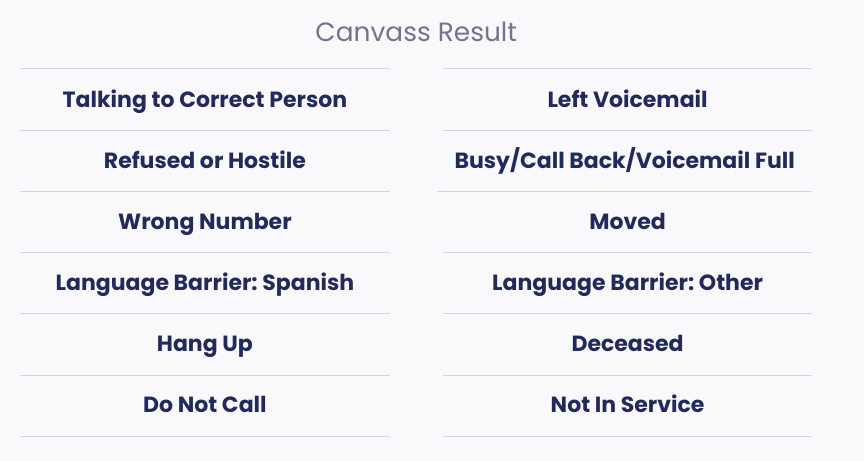
Although your talking points are scripted, it does not mean the people you reach will speak in turn. I was yelled at by a few angry Pennsylvanians, and one man was affronted that I thought “knowing if he planned to vote this year” was any of my “g*****n business.” I did have a few positive interactions, but for every live person I reached, I made about 35 voicemails. I memorized the script so quickly that I did not have to do much reading while leaving my messages.
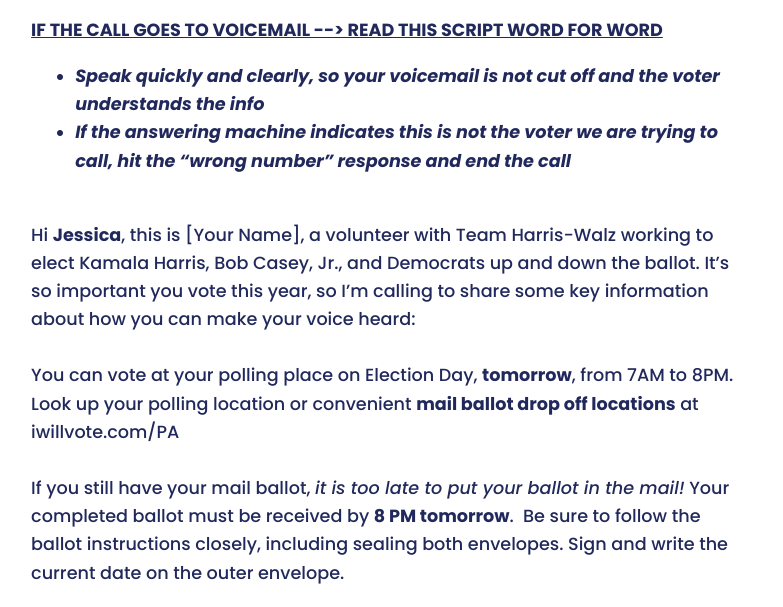
After two days of calling, I logged on before election night to find that I made it through my Pennsylvania callers list and was reassigned to Arizona. Out of 25 calls, only one person actually stayed on the line, although he made it clear he wasn’t happy to hear from me. I left what felt like another 20 billion voicemails before finishing my canvassing for good.
Upon reflection, and even after the results of this election, I am glad I took the time to canvas. Some may question how much of a difference one could possibly make, as I am probably not going to change anyone’s mind, and half of the people will never listen to that voicemail, but you never know. I can sleep peacefully, however, knowing that I did save one vote. When I asked a woman how she was planning to vote she informed me that she was going to drop her ballot in the mail soon. At the time of this conversation, we were two days out from the election, and for mail-ins to be counted, they have to be received by 8 pm on election day. She did not know her ballot wouldn’t have made it on time and reassured me she would now drop it off in person.
Phone banking, while arduous and repetitive, was a free and easy way to volunteer my time. Making a change does not have to be some official act done in a suit on the steps of the capital. I volunteered in bed wearing pajamas, and since it was via phone, was empowered to make as many faces as I wanted at the person who was on the other line. It provided me with an outlet to channel my election anxiety, and I will be looking for more grassroots organizations to volunteer with in the meantime.

 Masuk Free Press
Leave a comment