
Our generation, ‘Gen Z’, is extremely lucky. We have easy access to any information, the opportunity to get an education and a chance to see the astonishing technological advances of the future. But most importantly, we have amazing childhood movies. Home Alone, Frozen, Cars, Toy Story, Spy Kids… the list goes on and on. The names of some movies alone are enough to immerse people in nostalgia.
For some reason, the next generation is not following in our footsteps. Younger children these days are obsessed with short films on YouTube or TikTok. Because of this, they are gravitating away from what could have been childhood staples.
Home Alone, for instance, was the type of movie to laugh at with your family, enjoyable for both younger and older audiences. While it may have been a bit nerve-wracking for certain children at some points, it was generally a positive experience that created lasting memories for everyone. But today?
“If you care about the ideas and language you expose your kids to – then SKIP this MOVIE!” wrote parent Kim S. about Home Alone on Common Sense Media. Home Alone has been receiving critical reviews about being inappropriate for children as long as it has been out. However, in recent years, those feelings have escalated.
On Common Sense Media, parents can post reviews and age recommendations for the movie or show of their choosing. Reviews posted between the years of 2009 and 2016 for Home Alone averaged an age recommendation of 7.5 years old. Those posted from 2017 to 2023 averaged 9.2 years old—nearly two years more than it used to be. This poses a new question—why is this change happening now?
It is not hard to believe that modern parents are being more careful with the movies their children watch. One simple Google search of ‘movies bad for kids’ reveals hundreds of articles explaining the negative effects of violence and mature content on children. Some even claim that movies and shows in general are bad for kids.
Parental restrictions definitely play a part in their lack of movie watching. But in addition to this, many kids these days simply do not want to watch movies. They have plenty of other forms of entertainment.
A study by the UK’s Office of Communications in 2023 found that 92 percent of children ages three to four went online to watch videos, compared to 89 percent in 2022. YouTube was watched by 87 percent of three to four year olds and 89 percent of five to seven year olds.

These kids are growing up on fast content, constantly giving their brains new information to focus on. This is undeniably resulting in shorter and shorter attention spans.
A survey by Kapow Primary found that 84 percent of elementary school teachers agreed that attention spans were lower post-COVID. Starting kids young on YouTube and TikTok is not going to help this issue.
“My sister will tell me she wants to watch a movie, so we’ll turn one on, we’ll sit down, and two seconds later she’s doing cartwheels all over the place,” said junior Niti Shah about her 11 year old sister.
Few children today, even the older ones, can sit through and enjoy a two hour movie. Likely because of this, movie theaters have been getting fewer and fewer sales after 2020. Movies like Toy Story and Finding Dory all earned over a billion dollars in the box office. This compares to Elemental, one of the biggest new children’s movies, that earned $486.7 million. These earnings were less than half of older staples, but were still considered huge by Pixar.
After so many new movies have been unsuccessful, companies started resorting to making sequels of old popular movies. Take the 2023 release Spy Kids: Armageddon, for instance. It was rated 4.3/10 on IMDb. Even so, the movie made $148 million in the box office. This is nearly as much as the original.
Minions: The Rise of Gru was also the most watched children’s movie in 2022. These sequels get so much attention compared to other new releases, which coincides with the concept that older movies are simply more watched. But why is this?
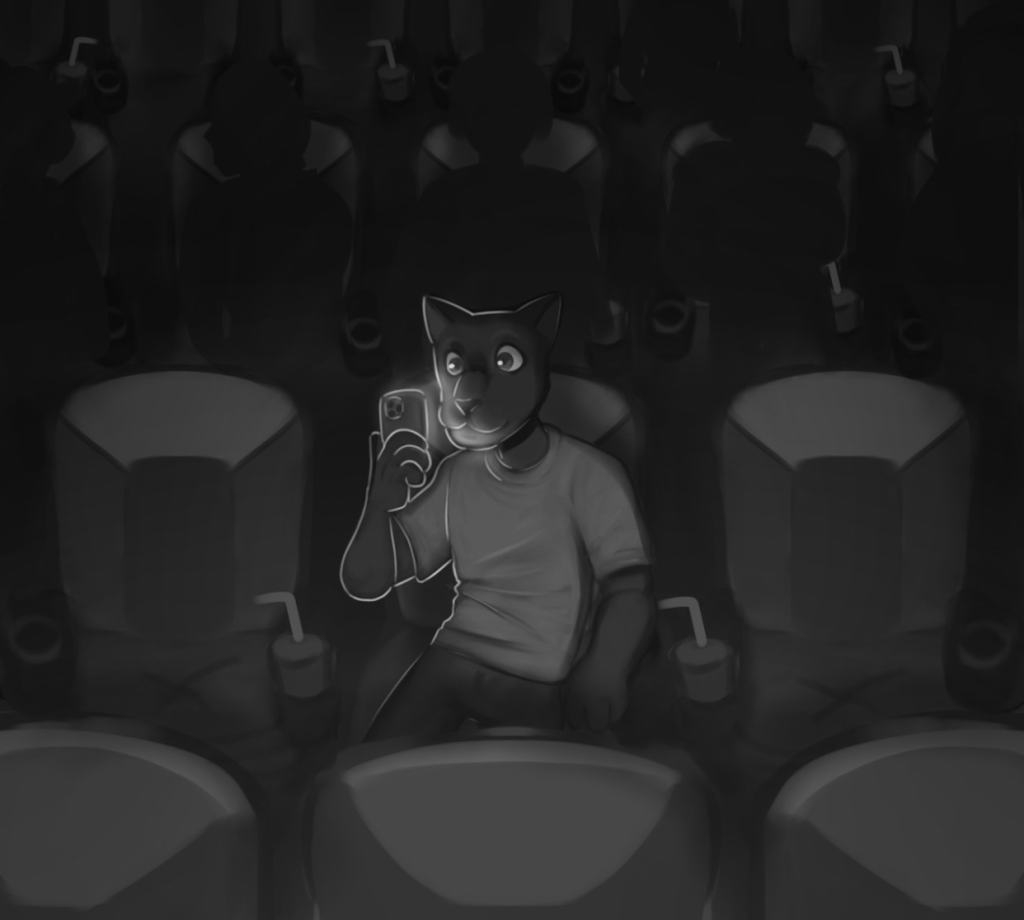
One possibility is that these new movies are being watched by older audiences for nostalgic purposes. Another, perhaps, is that children are not as inclined to watch recent movies because they just tend to be bad. Producers these days are undeniably less creative. They have fewer original ideas and much more pressure to incorporate strong positive messages. This restricts them from being able to focus on making a funny, entertaining children’s movie, like Home Alone.
Parents, YouTube, social media, worsening movies—the truth behind this decline in childrens’ movie streaming is likely a combination of all of the above. While it may be difficult for movie companies to try to gather viewers, children are likely content watching “Top 50 Greatest FORTNITE Clips of ALL TIME” while parents relax with the knowledge that their children are safe from being traumatized by a Cars 2 knockoff.
Maybe watching fewer movies as a kid is for the best. Maybe the transition to fifteen-second attention spans is inevitable. Or, maybe, millions of children are just missing out on lifelong memories and heartwarming nostalgia that would have followed them everywhere.


 Masuk Free Press
Leave a comment