
Sleep is crucial for human survival. It improves brain function, mood and overall health. In order to achieve these benefits, experts recommend a total of eight hours of sleep in order to fully recharge the human body. Yet according to research gathered from the Center for Disease Control (CDC), around 78.6 percent of teenagers in Connecticut do not get the recommended eight hours.
For many high schoolers, the time after school is filled with constant work. From after school clubs, to sport practices, plays, work and schoolwork, students’ schedules are filled. The idea of getting a proper eight hours of sleep is not an option for some.
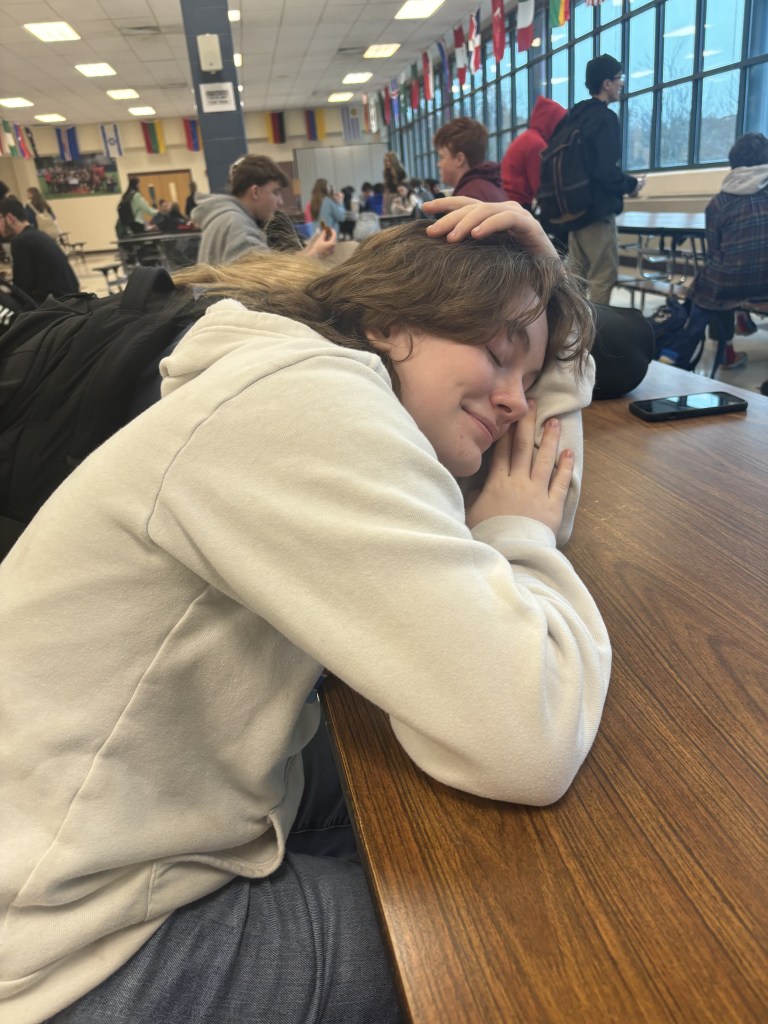
“I almost never get a full eight hours anymore,” said sophomore Mary Morrison. “I’m in a constant cycle of after school extracurricular activities for about seven hours, leading up to a late night of studying with almost no sleep.”
The complaint of not having enough time for a full eight hours of sleep seems to be shared among many. At the close of the first quarter, students are focused on wrapping up their coursework, which impacts their sleep schedules.
“I have tons of homework every night as well as spending hours studying for tests on top of that,” said senior Grace Foley.
Extracurricular activities also affect students’ time for sleep.
“I normally have cross country or track practice after school. Then I go home and change, then I go to dance, and I am normally at dance until about eight to nine,” said freshman Annabelle Kelly.
From the numerous extracurriculars to the hours of studying students have to do, it is easy to pin the blame on just the workload. But many argue that students’ sleep schedules are impacted by social media, as well.
“I think social media slightly impacts my sleep schedule, because I like to have time to check my phone and relax before bed,” said Foley.
Using a phone, specifically social media, has been reported as addicting. Could the issue of students not getting enough sleep be a result of students’ endless use of social media?
With the amount of work students have, many feel like they need the time to take a break.
“I had seven tests this week,” said sophomore Mayar Eltaeib. “I spent an hour studying for each of them, I think I need a little down time afterwards.”
Another potential contributor to the sleep crisis may be the consumption of caffeine among students. Masuk students disagree with that statement.
“I don’t drink caffeine, yet I still only get five hours of sleep,” said Eltaeib.
Other students claim that their consumption of caffeine is caused by their lack of sleep.
Morrison stated, “My caffeine consumption is because of my lack of sleep, not the other way around.”
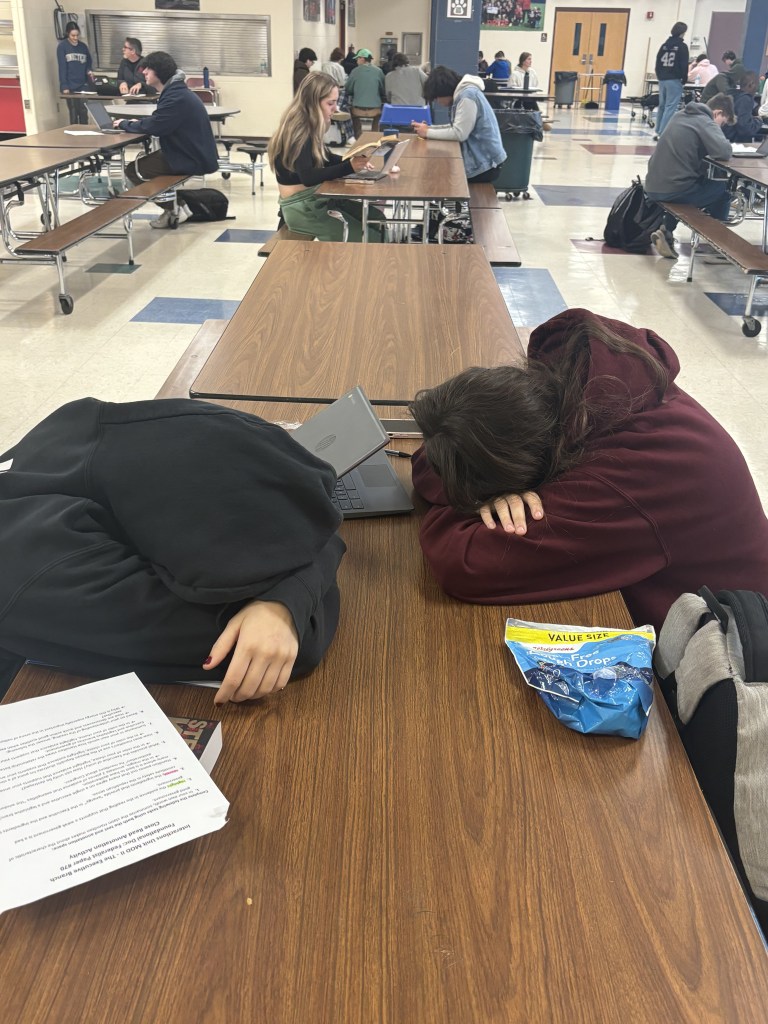
It is clear that the common thread behind high schooler sleep problems is the amount of school work and extracurricular activities. So what could be the solution to this problem? Maybe Masuk should teach high schoolers how to properly manage their time. Since high school students historically do not have the best time management skills, such a class could come in handy and could potentially fix the issue.
Another solution could be a change in the start time of school. Some districts in Connecticut, like Brookfield, have pushed their start time back from seven a.m. to eight a.m., with the goal of fixing the sleep problem. Maybe Masuk can do something similar.
Or maybe the solution to the sleep issue could simply be to lower the workload. After all, having seven tests, like Eltaeib had, is pretty excessive. Could the sleep issue solution simply be communication among teachers? With a new quarter starting, and midterm dates closely approaching the problems students face due to their lack of sleep are even more apparent. Maybe one day Masuk can find a solution to the problem, and help the 78.6 percent of Connecticut teens that do not get enough sleep. But for now, students can only dream about getting more sleep.




 Masuk Free Press
Leave a comment