
August, 2013, a new generation had begun their school career. Little legs ran excitedly towards colorfilled classrooms with silly shapes and pictures as their parents teared up at the sight of their little ones growing up so fast.
Among these young students was a girl; however, she was not running toward the colored pencils and kindergarten leisures. She was backing away.
She clung to her father’s pants like lint. No matter what persuasion or rubbing off he did, she did not budge. Tears started to stream down her face as a group of adults she didn’t recognize started to reach out for her; she screamed and ran away.
After her parents manhandled her into her seat at a circular table, eyes etched in confusion stared at her tear stained face. Like a puppet who cut his strings, her head folded into her lap. “Why did I act like that?” She questioned “Why didn’t I just sit at the table like the rest of the kids?”, “Why am I so uncomfortable, scared, why am I so shy?”.
Being the girl in the story, I was thankful that we had assigned seats then. I watched others make friends with the peers that encircled them, and I would just sit there, entertained watching the drama unfold.
Now, as a high school student, I’ve gained more independence and freedom. Such as sitting wherever I like. However it is quite embarrassing sitting in the corner of a table by myself as others group together with friends. Why are desks even grouped together? Why are we still sitting in a circle like kindergarteners? Why does school feel so unsafe? Thank the Extrovert Ideal.
In Susan Cain’s words, from her book, Quiet: The Power of Introverts in a World That Can’t Stop Talking, “We live with a value system that I call the Extrovert Ideal—the omnipresent belief that the ideal self is gregarious, alpha, and comfortable in the spotlight…” In other words, if you are a leader, confident, and most of all, like to talk, you are a “mighty likable fellow” and this society’s ideal personality. This ideal has been proven in many scenarios, such as how offices are organized for collaboration and the sharing of ideas, why you must add “lively and bright” on your work resume, and why participation points, group presentations, and popsicle sticks exist. Why desks are grouped together in schools.
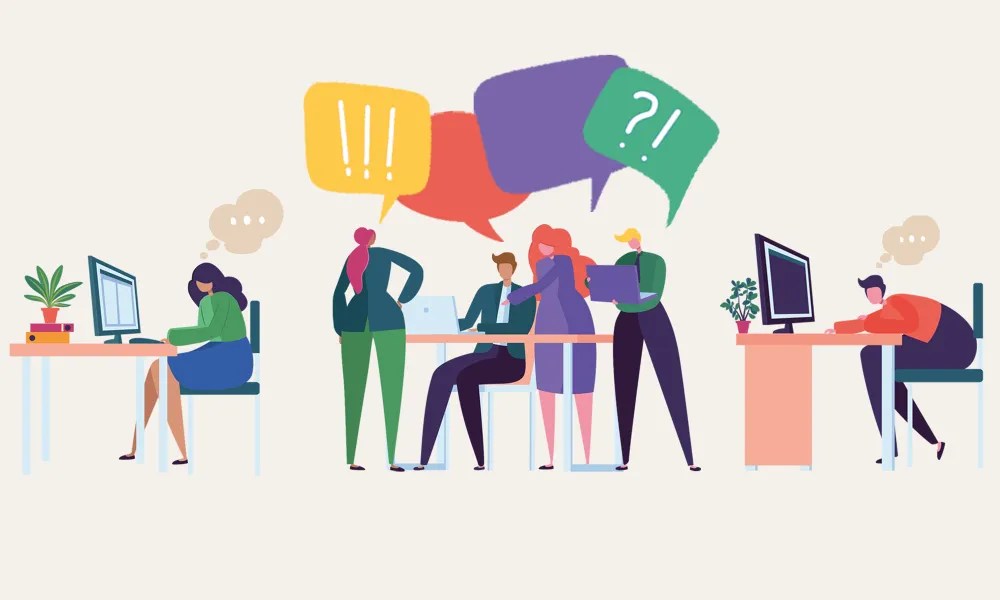
Especially in high school. Students are more connected with outside businesses and organizations that it is only necessary to educate students to be “gregarious, alpha, and comfortable in the spotlight…”.
“I do think a lot of the extrovert ideal being more prominent here now at Masuk is a direct result of the fact that for the year plus we were home behind screens and kids were not interacting with each other. You see a more of a call for teachers to provide those opportunities to students,” explains Principal Steven Swensen “We really are trying to develop, or redevelop, students’ ability to collaborate, work together, and problem solve as a team.”
However Masuk Social Worker Jessica Champagne exemplifies how Masuks recent incorporation of flex into the school day, may only be beneficial for those with extroverted personalities. “We created this whole other time in the day to give time for socials or clubs, but then we inadvertently also have this huge portion [of introverted] students who don’t know where to go. We need to find other ways to support those students.”
Champagne agrees with Principal Swensen that Masuk provides learning opportunities for both student personalities, however, flex is a perfect example of how western highschools need to adapt and acknowledge all their students.
School is the pathway to one’s future, made to prepare students for the real world and the workforce with different curriculum and classes. Collaborative learning is a must to survive in this big, loud, extroverted world. It not only improves our speaking skills, but promotes a deep understanding of diverse viewpoints, self-management, and leadership skills, all necessities to thrive as a lawyer, marketer, entrepreneur, or president.
“We live in a world now where collaborating, talking with people, whether it is through Zoom or physically in person, we have a responsibility to help students grow those skills,” says Swensen.
However, what about the young writers, artists, and musicians?
The extrovert ideal comes with its benefits, however, introverts and extroverts possess different learning styles. Extroverts gain energy with collaboration, Introverts lose it. This leaves introverts at a disadvantage of the “one-size fits all” learning system.
Extroverted individuals are stimulated by their surroundings, thus more likely to participate, and enjoy, the rush of in class discussions. Solitary assignments, on the other hand, drain extroverts.
Introverts are the opposite, introverts are internal thinkers, unlike extroverts, the rush is too fast for them. They deeply criticize their own thoughts and feelings, and take long to find and ensure a good answer that acknowledges all sides and opinions. This ultimately ends in them choosing not to answer or respond to group discussions.
Collaborative learning and speech lessons are not going to change this internal confusion. There should be a balance between extroverted and introverted curriculum.

In a setting where they are already overwhelmed by the population in a classroom, introverted students have little mental energy in a school environment. Reaching for the popsicle sticks is not going to help them. Educators have instinctively categorized their introverted students as lazy and unfriendly, unsure if they understand the material or if they even give a damn, resulting in forced engagement.
Demanding young learners to speak up and participate more is not going to motivate them, in fact it does the opposite. The extrovert ideal in schools has taught introverted students that their behavior and personality is something that needs to be fixed. That being a slow thinker and a slow worker is a sign of unintelligence. This promotes insecurities and anxiety in the classroom. Introverts become fearful of what they should say, wondering if they will stay introverts forever and that their blabbering subordinates will always be deemed smarter.
Schools in favor of extroverted learning styles disadvantage introverted students and get in the way of their success and impact on the world. The extrovert ideal ignores the values of independent working and thinking, the stepping stone to creativity and logical analysis.

A tip or two for schools who want to acknowledge all their students and ensure successful and well-developed graduates:
Introverted students such as myself are very self-reliant. If we don’t understand something we’ll review it on our own at home or stay after school for a private lesson with the teacher. Teachers should try to understand our needs. If you are unsure where we stand academically, pull us after class, we love insightful and intimate conversations and learn better one-on-one. If you call on us unexpectedly, not only will we become fearful of speaking, but become fearful of you and your class.
Give students a choice and balance group work with individual work. Introverts become anxious when it comes to unexpected pairing. Unless the group activity is for educational purposes, if students wish to work with each other, they can, if not, they do not have to. This accommodates both extroverted and introverted learning styles and promotes trust between teachers and their students because they acknowledge their comfort levels. As I stated before, if we have a question, we will not hesitate to speak with you privately. If you are still concerned about our collaborative abilities, remember, we are all not training to become presidents.
Value introverted qualities and promote self – expression. Introverts have a lot to offer being good listeners and internal thinkers. Accept these skills and put them to the test with introverted activities such as reading, writing, and journaling, followed by small group discussions. Teachers remember, the best speakers are not always the best thinkers.
“I would hope that Masuk is a school for both [introverted and extroverted personalities]” states Swensen, “I think that when we are trying to get students to share their ideas, I think there should always be [a] shorter period of time to give individual students time to collect their thoughts before a text that was read or a question that is posed.”
Principal Swensen, being an introvert himself, admits that providing quick responses to his colleagues and students can be challenging. He anticipates that providing both introverted and extroverted students with even a minute of time to reflect and organize their thoughts can be beneficial and ease anxiety in his students.
A word for the quiet:
You should not feel as if you do not have control over your academic success. We are all different and interpret information differently. Eleanor Roosevelt, Mahatma Gandhi, Albert Einstein, and Rosa Parks all had introverted personas. Being an introvert does not make you unintelligent or any less a leader. Your insightful thoughts acknowledge every little thing and you can create change through art, writing, and music.
Ignore the extrovert ideal, but not your educators. They want to prepare you for your bright future, so listen to them. Do not mimic the extrovert ideal, embrace yourself in a way that ensures your success. Adapt to it, reread the material and familiarize yourself with lessons, then you will be less nervous when it comes time to share in class.
Unfortunately, you are bound to face matters in society and the workforce that induce anxiety and stress. According to Champagne, “introverts may need to be adaptable. Learn to manage [their] energy in certain areas,” Champagne considers herself an introvert as well, despite her busy and sociable position, “At work, I talk to a of people, parents, and co-workers, but I do it because I know that I can recharge at the end of the day with quiet reading.” Knowing how to balance yourself throughout the day and rewarding yourself by night will help you demolish those insecurities and negative thoughts and will be beneficial towards your mental and physical health.
Your response matters, but remember all your answers do not have to be perfect. Mistakes are a part of the learning process, and it helps you understand what you need to work on. When you find yourself at a loss for words, listen to group discussions, and reflect your opinion off someone else’s. This is not stealing their idea, you are making yourself heard by listening. “Don’t think of introversion as something that needs to be cured”, Susan Cain.
The education system should not be swayed by an idea that seems ideal. Classrooms should accept and accommodate all students and their learning styles. The realists and the artists, the extroverted and the introverted.



 Masuk Free Press
Leave a comment