
After two and a half relaxing months of summer, Masuk students were prepared to ease back into the high school lifestyle. But many were left with a poor taste in their mouths. They realized that their precious internet connections were no longer working the same way.
The Masuk IT department updated the WiFi used by the school over the summer, and not everyone is happy with the changes.
While school was out, many alterations were made. Some obvious and others less so. The names of the WiFi connections offered at Masuk previously were “Masuk Public” and “Masuk Wireless.” Now, the two connections offered are instead “MH-Public” and “MH-Trusted”. If these were the only two changes, there would be no need for alarm. But to the dismay of many, there were much more vexing issues.
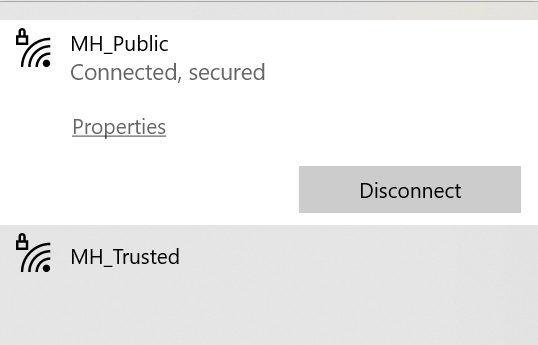
Alongside these surface-level name changes, the internet was also altered on the back end. MH-Trusted only works with devices that are registered with the school. This means that school Chromebooks and other school computers are the only devices that can use MH-Trusted.
William McDonough, a Masuk computer science and robotics teacher, explained further changes having to do with bandwidth (the amount of data that can be sent from one point to another in a certain period of time):
“Last year, if you remember, the state science exam crashed. We didn’t have enough bandwidth to run all the pieces. So they did a better job delegating bandwidth over that. So the school machines can actually handle anything that happens.”
Any Internet slowdown Masuk students and staff have experienced is actually a side effect of the bandwidth adjustments.
“There’s less bandwidth because they’re worrying more about the school devices than your devices,” said McDonough.
“They’ve divided it so that there’s a guaranteed amount of bandwidth going to all the school computers, so they should work and function the way they’re supposed to in class. The downside is if we have a thousand students in the building and everybody puts their phone and their personal computer on it, public WiFi is going to become really slow.”
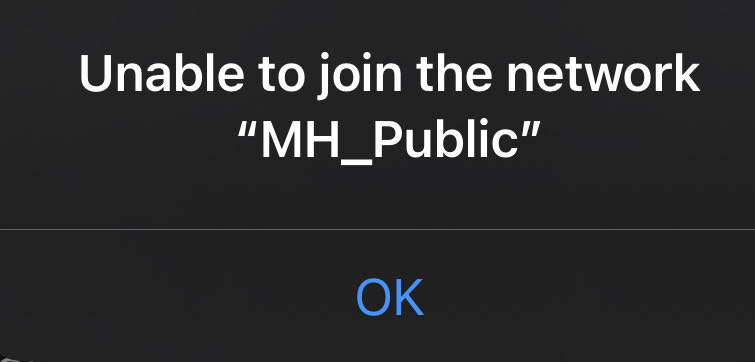
Both connections now also require a password, ideally increasing the security of Masuk’s network. The new password being “panthers.”
“It adds one extra layer [of security]. They’re trying to eliminate any issues with spam or spam bots. Things coming in from people’s own computers,” McDonough added.
The changes were quickly noticed by students at Masuk. A large portion of which reacted with annoyance, or even anger. But the outrage is not just relegated to the students. Even Masuk staff have expressed distaste for the recent changes.
“Well, when I first came back to Masuk for the new year, I noticed that my text messages and my phone calls were not really going through. Not that I’m constantly on my phone, but I definitely communicate with my husband. We have three children in school, so we communicate about that a lot. I was receiving messages but not able to respond to them. I was having to step outside to make those phone calls,” stated Lauren Iverson, a Spanish teacher at Masuk.
Her worries were compounded as she added, “My daughter got hurt at school yesterday, and I didn’t get the message until a little bit later.”
Issues like these can pose a big risk for people like Iverson who need to be able to communicate with their families while at school.

Although the modifications to the WiFi were made with well-intentioned purposes, their outcomes have become quite controversial.
“It used to be bad. Now it’s worse,” says junior Michael Blake.
The changes may seem small, but in an era where education (and entertainment) is so heavily reliant on the use of the Internet, the changes have affected most, if not all, at Masuk. With time, hopefully most of the simpler issues will be addressed. And as the school year progresses and students adjust to the changes, Masuk can return to normalcy.



 Masuk Free Press
Leave a comment